Movement

Build a Calmer, Stronger Back

McGill's Big Three: less random stretching, more spine stability.

Card lesson7 sections
Published by RebuiltLast updated: Sources visible below

Most angry backs want stability, not more drama

A sore back does not automatically need more stretching, twisting, and guessing.

Often it needs calmer movement, better bracing, and fewer sloppy repetitions. This is not a cure-all. It is a safer starting point for backs that flare when load and motion get messy.

Your spine has a bending budget

Repeated bending under load can irritate some backs more than people realize.

A useful rule is to hinge more from the hips, keep the spine calmer, and stop asking the low back to do extra motion it does not need to do.

Quick check

Back-Saving Habit

What is 'Spinal Hygiene'?

  1. Stretching your back for 20 minutes a day.
  2. Using your hips to hinge and keeping your spine neutral during daily life.
  3. Sleeping on a hard mattress.

Correct. Hinging more from the hips and keeping the spine calmer is one of the most useful everyday back habits.

Try this

Modified curl-up

Lie on your back with one leg bent and one straight. Keep a small natural arch in the low back. Lift the head and shoulders slightly and hold for about 10 seconds. This should feel controlled, not dramatic. Stop if it increases pain sharply.

Try this

Side bridge

From your side, prop on the forearm and lift the hips into a straight line. Bent-knee version is fine. Hold for about 10 seconds and switch. The goal is trunk endurance, not showing off.

Try this

Bird-dog

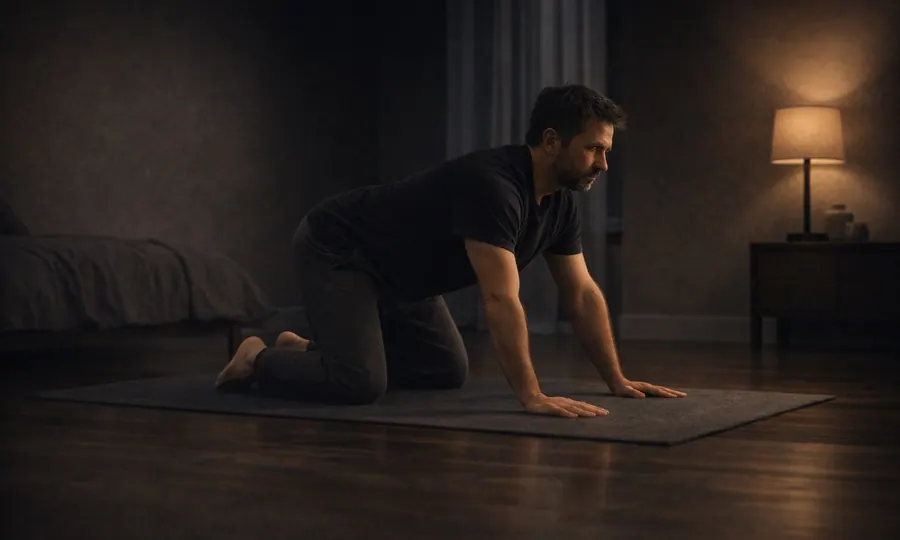
From all fours, reach one arm forward and the opposite leg back without letting the trunk wobble. Hold for about 10 seconds, switch, and repeat. Think steady, not high.

Key idea

What to remember

For many sore backs, calmer motion and more trunk endurance help more than random stretching. Use the hips more, keep the spine quieter, and stop if pain is sharp, spreading, or worsening.

Stop any exercise that causes sharp or worsening pain.

Sources

  1. McGill S (2015, Back Mechanic)
  2. McGill S (2017, Ultimate Back Fitness)

Further reading

  • Back Mechanic — Stuart McGill
  • Gift of Injury — Stuart McGill & Brian Carroll