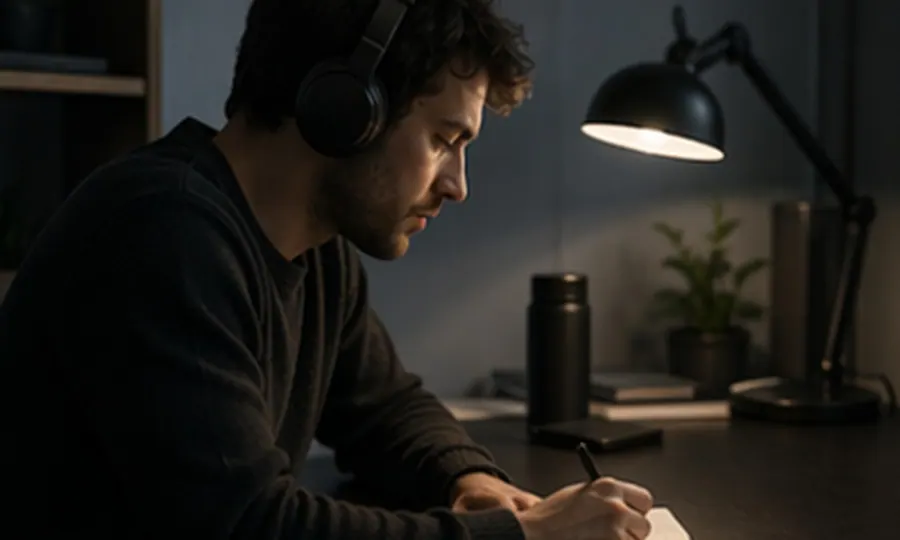
You sat down to do the hard thing. The phone was face-up, twelve tabs were open, and someone could lean over at any second. You hadn't lost focus yet, but the block was already losing.
A lot of focus problems are really lane problems
Interruptions cost more than the interruption
Sophie Leroy named this attention residue: after you switch away, part of your mind stays stuck on the last thing. A quick check is never just quick, because the reload time is the real cost.
Environment should make focus easier, not more heroic
A good focus lane removes avoidable decisions before the block begins.
The point is not perfect minimalism. It is fewer inputs competing for your mind.
Quick check
Focus-lane check
Try this
Exile the phone
Ward and colleagues (2017) found lower performance on some cognitive-capacity tasks when participants kept their phone on the desk instead of in another room. Try another room for one block and compare. Start with 45 minutes if 90 feels fake.
Try this
Lock the noisiest sites
Use a blocker during the block instead of trusting yourself to renegotiate with the same temptations every day.
Try this
Clean the sightline
Face a quieter part of the room, reduce moving clutter, and keep only the tools the block actually needs.
Key idea
What to remember
Set the lane before the work starts. Phone gone, blocker on, sightline cleaner, and one signal that says this block is already in progress.