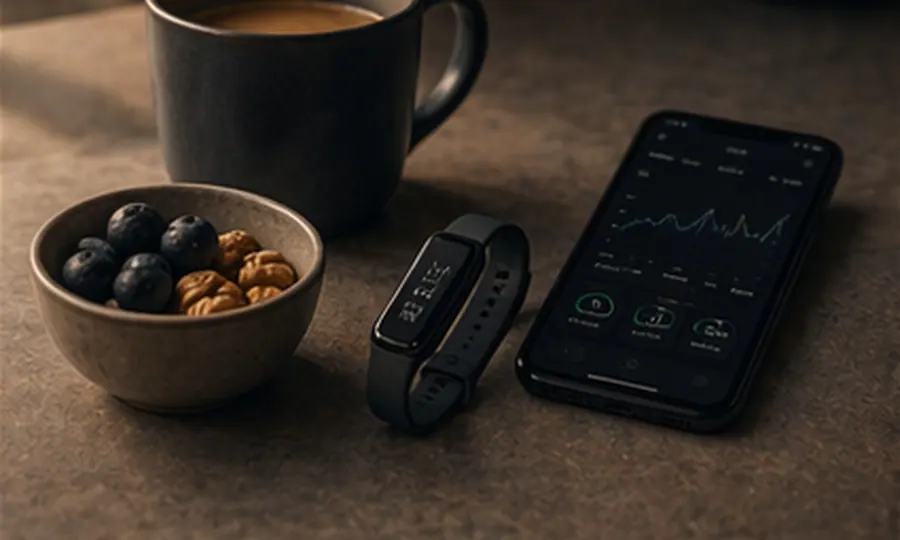
Sleepiness, hunger, stress, meal size, poor sleep, and many other factors can overlap after a meal. A slump is context to notice, not proof of a glucose spike or insulin resistance.
A post-meal crash is not a glucose diagnosis
Meals hit people differently
Meal size, protein, fiber, sleep, stress, training status, and existing insulin sensitivity all change the response. That is why the same meal barely nudges one person and sends another into spike-crash territory.
Do not chase a perfectly flat line
Glucose normally changes after food. A consumer monitor can show a pattern, but it cannot diagnose the cause by itself. If results worry you, take the pattern to a healthcare professional rather than treating one graph as a verdict.
Quick check
Quick check
Try this
Change one ordinary meal variable
If one meal repeatedly feels uncomfortable, change one ordinary part of it: add protein or fibre, adjust the portion, or take an easy walk. Keep any observation private and avoid scoring symptoms in the app.
Try this
Use three low-risk meal supports
Add a protein food, add fibre or volume, and take a comfortable short walk after eating if you can. These are ordinary supports, not a treatment plan or a guarantee of a flat reading.
Try this
Check what the drink adds
Sweet drinks can add a large amount of carbohydrate without much fibre. If you want to change the meal, water or an unsweetened drink is one simple option; it does not explain every slump.
Key idea
What to remember
A slump is not a diagnosis, and a wearable graph is not a clinical test. Use ordinary meal structure and movement first, and bring persistent concerns to a healthcare professional.