Focus / Deep-dive lesson

How to Stop Checking Your Phone First Thing

Change the morning phone doorway with distance, a delayed first check, fewer visible cues, and one replacement action that is easy to start.

Published by Rebuilt5 sources
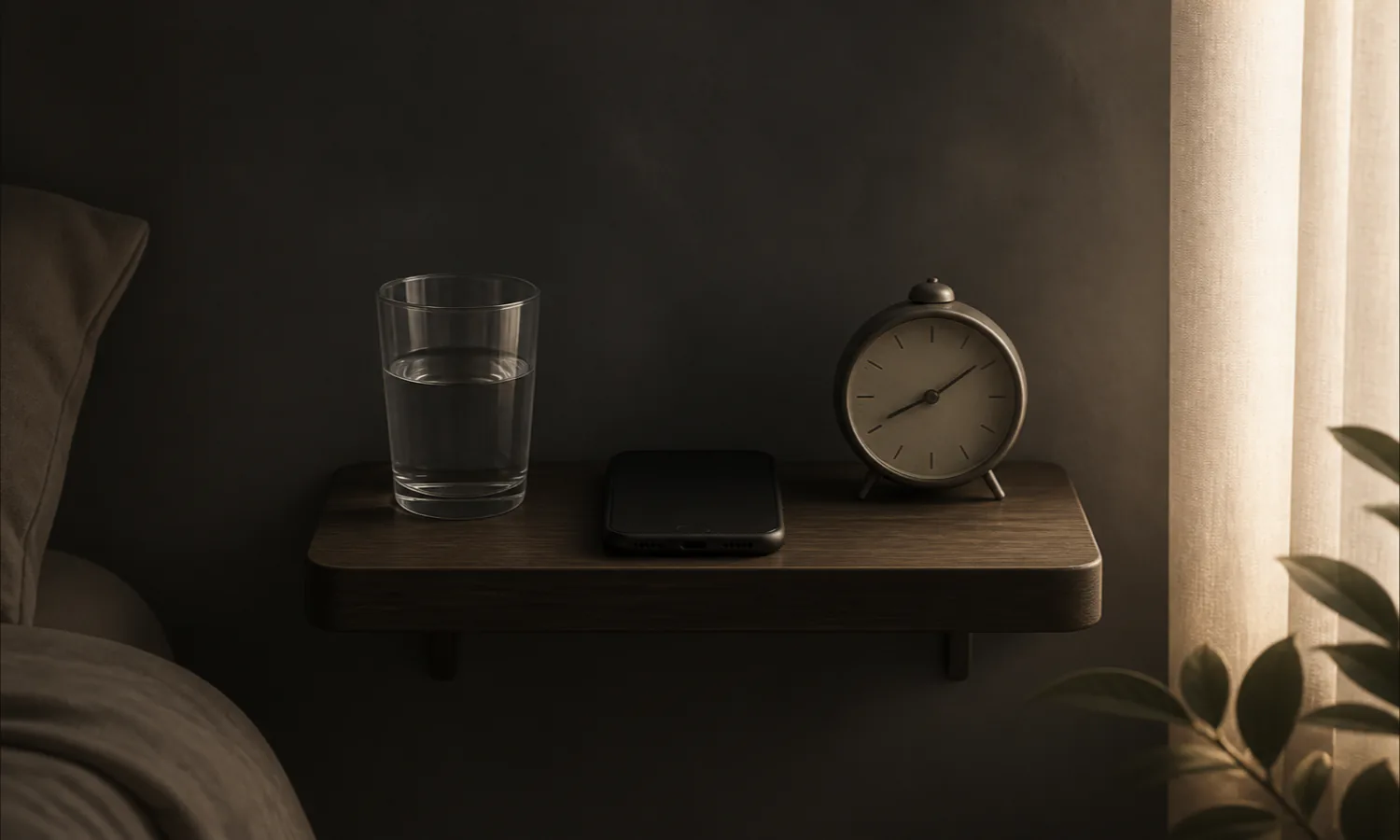
A face-down phone rests on a shelf beside a glass of water and an alarm clock as morning light enters the room.

Change the doorway, not your personality

Tonight, charge the phone outside arm's reach, choose the first allowed check time, remove feed shortcuts from the first screen, and put one replacement action where the phone used to be. In the morning, do that replacement before the first optional check.

You do not need a screen cleanse, a sunrise ice bath, or moral purity. You are changing a checking habit whose cue is often simple: wake up, see phone, touch phone.

This guide is for adults and addresses an ordinary habit, not an addiction diagnosis. This is educational content. If you're experiencing symptoms, consult a healthcare professional.

Repeated contexts can trigger behaviour before a fresh decision

Wood and Neal (2007) describe habits as learned links between a context and a response. Once that link is strong, meeting the cue can prompt the action even when today's goal is different. Oulasvirta and colleagues (2012) observed brief, repeated smartphone “checking habits” around quickly changing content.

Morning phone use is not identical for everyone. Some people check medication reminders, transport disruption, children, relatives, or on-call messages. Define the problem precisely: which optional doorway turns a necessary check into an unwanted scroll?

Use [Scroll Triggers Audit](/lessons/scroll-triggers-audit) to find the cue. The intervention should target that cue, not punish all phone use.

Make the first unwanted action less available

The easiest useful change is physical distance. Ward and colleagues (2017) found lower performance on some cognitive-capacity tasks when participants' own phones were on the desk rather than in another room. The study was not about mornings and does not prove that a nearby phone ruins your day, but it makes distance a reasonable low-cost experiment.

Try one of these tonight:

  • put the phone across the room or outside the bedroom;
  • use a basic alarm clock if you already own one;
  • keep emergency calls audible while muting optional notifications;
  • remove social, shopping, and news apps from the first screen;
  • log out of the one feed that captures you most often.

Keep the setup reversible. You are testing a doorway, not swearing an oath.

Replace the check with something that already has a cue

Lally and colleagues (2010) followed adults repeating a chosen behaviour in a stable context. Automaticity generally grew with repetition, but the pace varied widely; missing one opportunity did not destroy the process. That study was not about phones, so avoid the internet myth that every habit takes exactly 21 or 66 days.

Choose a replacement that takes under two minutes and sits in the old phone location:

  • drink the water already on the table;
  • open the curtains and stand outside or by a bright window;
  • put on clothes laid out the night before;
  • write today's first task on paper;
  • feed the pet or start the kettle.

The replacement should move the morning forward. “Meditate perfectly for 45 minutes” is just a new way to fail before breakfast.

Try this

Write one first-check rule

Gollwitzer and Sheeran's 2006 meta-analysis found that specific if-then plans improved follow-through on average across many goals. Use the format without overselling it:

If I turn off the alarm, then I put the phone on the shelf, open the curtains, and get dressed before checking feeds.

Choose a boundary that fits your life:

  • sequence rule: after shower and breakfast;
  • time rule: after 07:30;
  • place rule: only at the kitchen table;
  • purpose rule: messages and weather are allowed; feeds wait until later.

A narrow rule is easier to keep than “no phone in the morning.” If you wake after a bad night and need a gentler plan, use [How to Recover After a Bad Night's Sleep](/lessons/how-to-recover-after-a-bad-nights-sleep) instead of relying on scrolling to feel awake.

Try this

Recover from a slip at the next screen

If you open the feed automatically, do not declare the morning ruined. Close it at the next moment you notice, put the phone in its parking place, and do the replacement action. Habit change is built from repeated returns, not a perfect streak.

After seven mornings, review only three things: Did distance prevent the automatic reach? Was the first-check rule realistic? Did the replacement actually move the morning forward? Adjust one element.

Keep necessary access intact. If you are on call, support a relative, use accessibility features, or need transport and weather updates, build a purpose rule that preserves those functions while delaying feeds. The goal is fewer accidental doorways, not making the morning less safe or accessible.

If phone checking breaks the later workday too, continue with [How to Focus When You Work From Home](/lessons/how-to-focus-when-working-from-home). If use feels out of control, is causing serious harm, or is tied to distress you cannot manage alone, speak with a qualified professional rather than self-diagnosing “phone addiction.”

Key idea

Your phone needs a parking place and an opening time

Tonight: move it, simplify the first screen, and place the replacement.

Tomorrow: follow one sequence, time, place, or purpose rule.

After a slip: close the feed and return at the next screen.

The aim is not to hate your phone. It is to make the first part of the day belong to a choice you made while fully awake.