A lot of joint pain does not start with one dramatic injury.
It starts with long stretches in the same few positions. When you stop using range, tissues stiffen, cartilage gets less input, and normal movements start feeling worse than they should.
Movement / Card lesson
Joints hold up better when you move them like they still belong to a living person.
A lot of joint pain does not start with one dramatic injury.
It starts with long stretches in the same few positions. When you stop using range, tissues stiffen, cartilage gets less input, and normal movements start feeling worse than they should.
Joint cartilage does not get a rich direct blood supply the way muscle does.
It relies heavily on movement and pressure changes to circulate synovial fluid, deliver nutrients, and clear waste. Full-range motion is not extra credit. It is part of basic maintenance.
Under long static loads, tendons and ligaments gradually deform.
This is called creep. If you sit folded for hours and never interrupt it, the body starts treating that shape like normal. Then the hips, shoulders, and neck usually start complaining first.
Quick check
Try this
Take the neck, shoulders, and hips through 3 slow controlled circles each direction. Go as wide as you can without cheating or rushing. This is a simple way to remind joints what range still exists before the desk narrows it again.
Try this
Hold a doorframe, sink into a deep squat, and stay there for 20 to 30 seconds. Chest tall, heels down if possible, no need to push it. This is one of the easiest ways to reopen the ankles, knees, and hips after long chair time.
Try this
Use a bar and let the shoulders open up under your bodyweight, with feet helping if needed. Start with 20 to 30 seconds. Hanging gives the shoulders and upper spine a position most modern life barely touches.
Try this
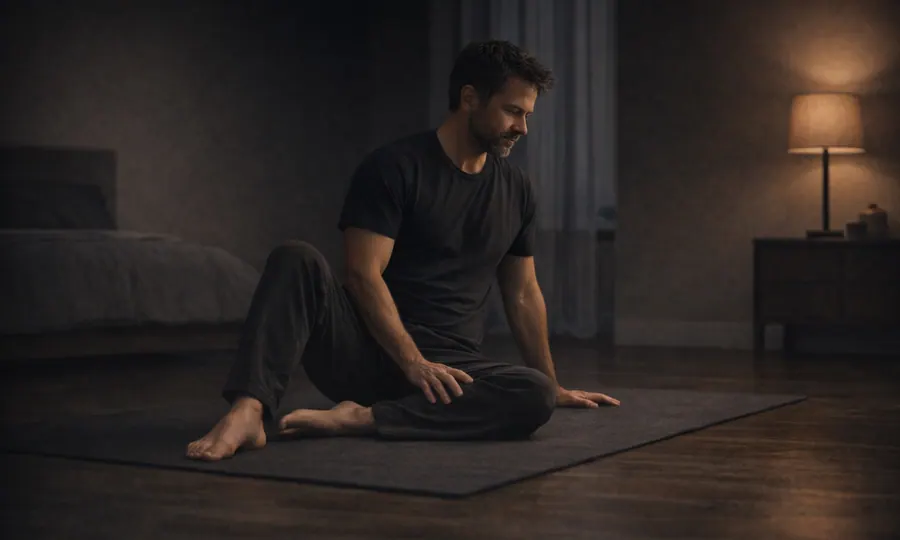
Sit in a 90-90 position, rotate the torso, then switch sides slowly for 6 to 8 reps total. This restores internal and external hip rotation, which tends to disappear when your hips spend most of their life at one angle under a desk.
Try this
Lift one foot and draw 10 slow circles each way. Ankles are small and easy to ignore, but when they lose range, the knees and low back often get asked to make up the difference.
Key idea
Joint care is mostly regular range: 3 slow circles, 20 to 30 seconds in a squat, 20 to 30 seconds of hanging, 6 to 8 hip switches, and 10 ankle circles each way. Small daily motion usually beats one big corrective session.
Stop any exercise that causes sharp or worsening pain.