Give a small task all day and it often becomes an all-day task.
Not because it needed the time. Because extra time invites hesitation, polishing, and side quests.
Rhythm & Time / Card lesson
Loose time makes simple work expand; smaller honest boxes keep tasks cleaner.
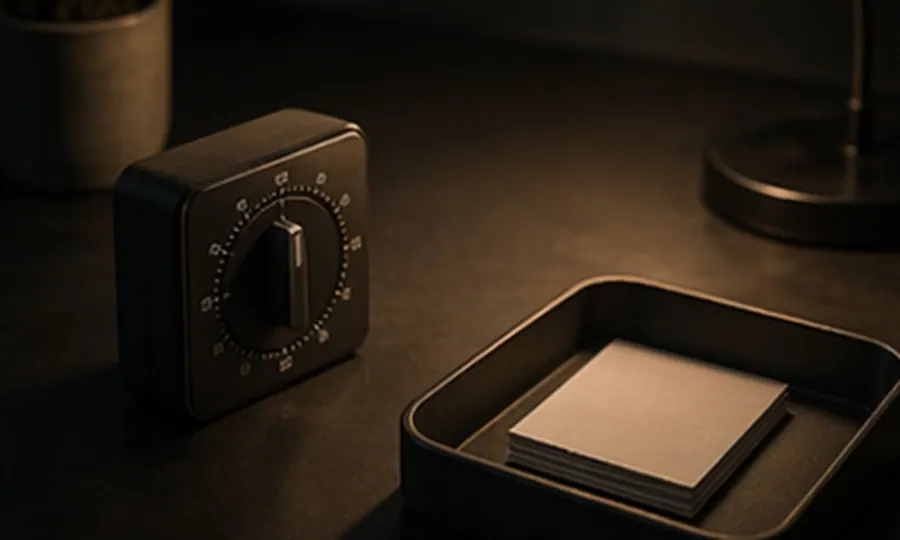
Give a small task all day and it often becomes an all-day task.
Not because it needed the time. Because extra time invites hesitation, polishing, and side quests.
A time box is not punishment.
It asks the task to prove it deserves another round instead of receiving your whole afternoon by default.
A tighter box does not always make the work rushed.
Often it makes it more honest. The task has to earn extra time instead of receiving it by default.
Quick check
Try this
Try this - Email: 10 minutes - Outline: 25 minutes - Deck cleanup: 45 minutes - Admin batch: 30 minutes
When the timer ends, either ship, stop, or deliberately grant one more round.
Try this
Before starting, write one sentence: This is done when ____.
Without a done line, polishing can pretend to be progress.
Key idea
Do not size the work to the day. Size the day to what the work actually deserves.