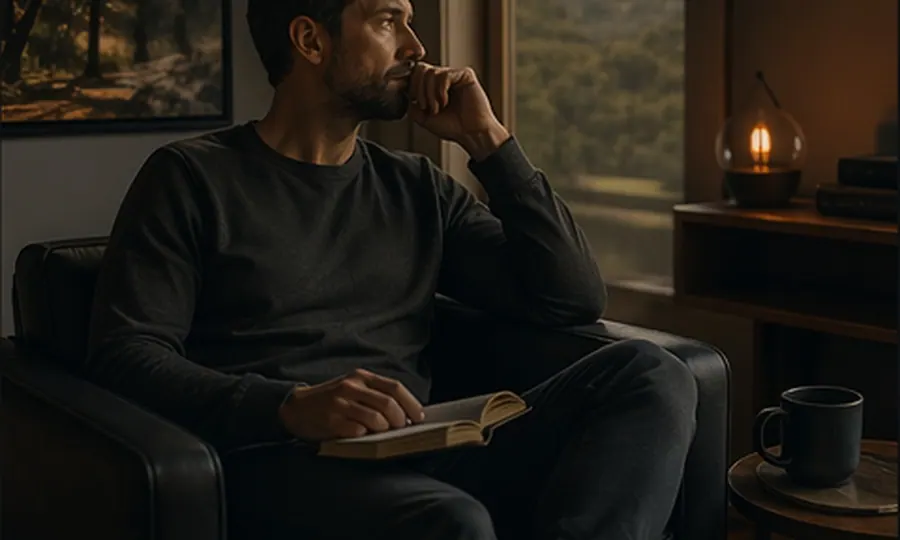
The story you use changes how hard things land
When everything difficult gets framed as proof that life is against you, effort gets heavier fast.
When difficulty gets framed as part of a path you chose, the same effort can feel more workable. The point is not fake positivity. It is a better frame.
Meaning changes stress
A difficult stretch feels different when it seems pointless versus when it feels connected to growth, service, or a chosen direction.
Meaning does not remove stress, but it can change the way the stress is carried.
Reframing gives the effort a job
If a problem is only pain, the brain usually wants out.
If it becomes training, cleanup, repair, or a necessary chapter, you often get more endurance inside it. Reframing is useful when it makes the work clearer, not when it turns into self-mythology.
Try this
Protagonist Log
Each evening, write down one thing you did that matches the person you want to be. Keep it concrete: sent the hard email, stayed honest, kept the promise, showed up anyway. Evidence beats slogans.
Try this
Intentional Obstacle Framing
Take your biggest current difficulty and rename it in plain, useful language: cleanup, repair, learning curve, stability block, patience test. The rename should reduce panic, not make you sound dramatic.
Try this
Weekly Character-Arc Review
Each week, ask one question: what did this week train in me? Patience, honesty, endurance, better boundaries, better judgment? The review matters because hard weeks often feel empty unless you name what they taught.
Try this
Mentor Identification
Pick one real person, mentor, or model whose style you respect. When things get messy, ask: what would they probably do next here? This helps when your own thinking gets noisy.
Try this
Daily Mission Statement
Before work, write one sentence connecting today's task to something larger you care about. Not because every task is inspiring, but because remembering the direction makes repetitive work easier to tolerate.
Key idea
What to remember
You do not need fake positivity. You need a story that lets hard things mean something without turning them into proof that you are doomed.
The frame changes the fight.