Cortisol is useful in the morning.
At night, too much of it can keep your brain from fully getting the message that bedtime is real.
Stress / Card lesson
Learn how cortisol normally changes across the day and reduce late caffeine, light, and unfinished-task cues.
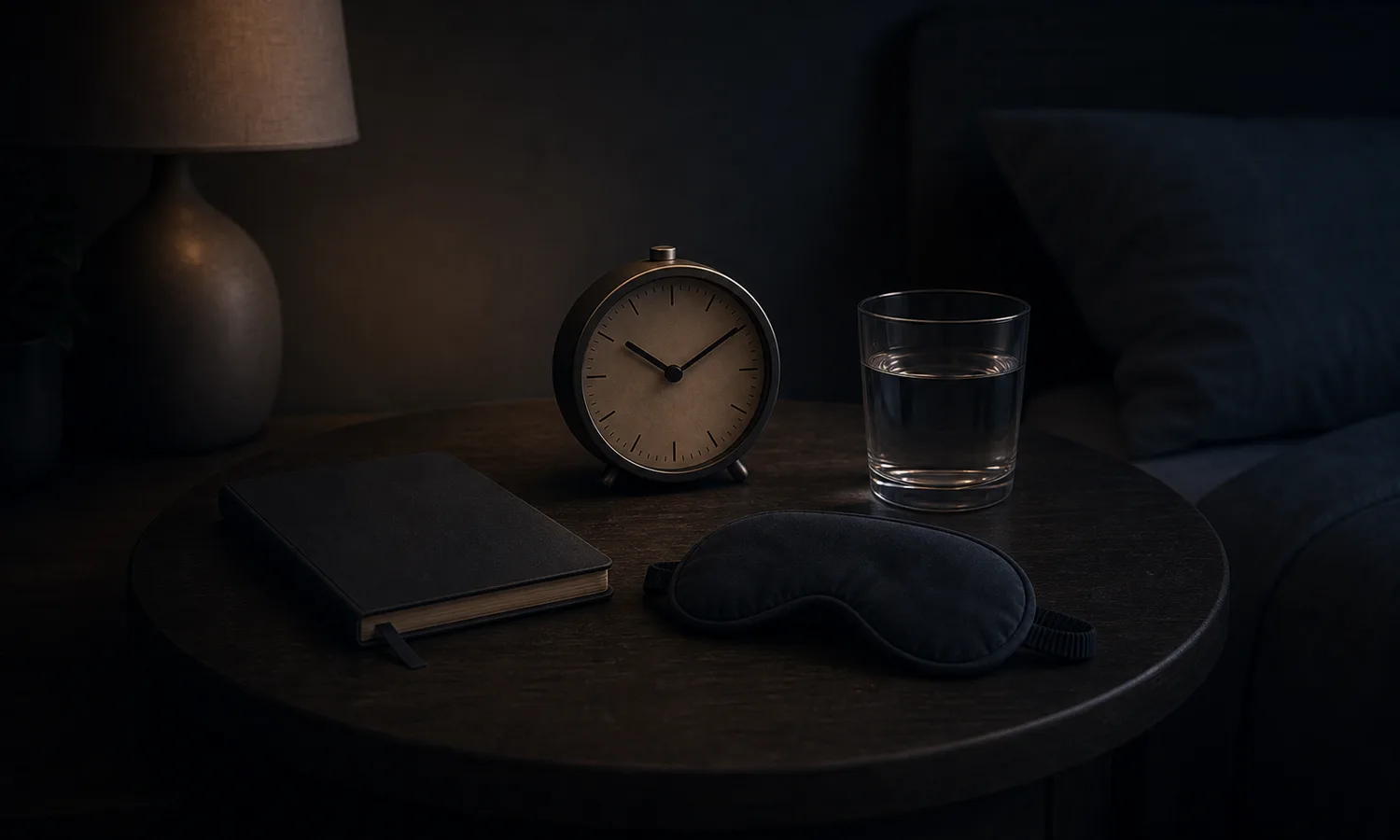
Cortisol is useful in the morning.
At night, too much of it can keep your brain from fully getting the message that bedtime is real.
A morning cortisol rise is normal.
It helps you wake up and get moving. High cortisol when you are trying to sleep is where things get messy.
At night, cortisol should fall so the body can move toward sleep.
When stress keeps cortisol high, that shift gets delayed. In plain English: part of you is still acting like the meeting is happening.
Quick check
Try this
Drake et al. (2013) found that a large caffeine dose could shorten sleep even six hours before bed. Keep the morning cup where it works for you and protect an earlier cutoff before sleep.
Try this
If magnesium helps you feel calmer in the evening, great. If it does nothing, also normal. Treat it as a small support, not the main event. The bigger wins are still light, timing, and lower stimulation.
Try this
Do a 5-minute brain dump before bed. Use 3 quick headings if it helps: tomorrow, worry, open loop. Write the task, the worry, or the unfinished thing once, then stop. Paper often settles the mind faster than trying to remember everything in bed.
Try this
Light leaks matter more than people think. Cover LEDs, shut bright hall light out, and use blackout curtains or an eye mask if you need one. You want the room to feel clearly dark, not like a dim office.
Try this
Use bedding, airflow, or room temperature to stay comfortably cool. There is no single number that fits every person, season, or bed.
If you cannot cool the room well, a warm shower before bed can still help by letting your body cool afterward.
Key idea
Cortisol should help you wake up, then get quieter at night.
A useful reset is simple: delay caffeine after waking, write down open loops before bed, make the room dark, and cool it as much as comfortable.
Morning is for the cortisol rise. Night is for the downshift.