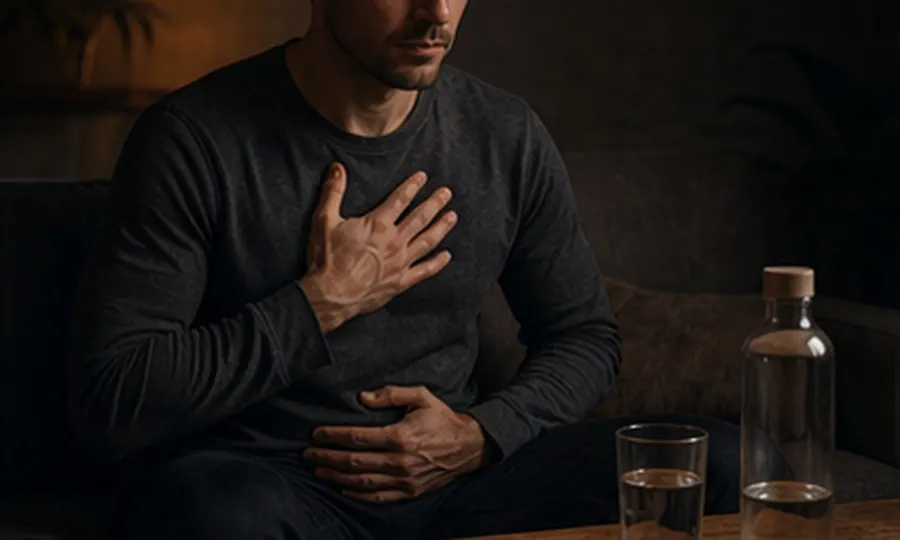
The body says something is wrong, get more air. Then bigger faster breaths make the symptoms louder. That loop is part of why panic breathing can feel so convincing.
Panic often tricks people into breathing harder than the moment needs
Overbreathing can create dizziness, tingling, and chest weirdness
Hyperventilation symptoms can come from breathing off too much carbon dioxide.
That does not mean every short-breath moment is anxiety. It does mean panic can create a loop where the breathing style itself adds symptoms.
Quick check
Quick check
Try this
Sit down and reduce the breath size
Try a softer inhale through the nose and a longer exhale through pursed lips. Think smaller and slower, not deeper and harder.
Try this
Use counting if it helps
A simple 3-second inhale and 4- to 6-second exhale can be enough. The numbers matter less than the softer pace.
Try this
Know when this is not a breathing drill anymore*
New crushing chest pain, fainting, blue lips, severe asthma symptoms, or obvious medical distress is not a self-coaching moment. Get help.
Educational content only — not medical advice.
Key idea
What to remember
When panic makes you chase air, smaller and slower is often the better move. Sit down, lengthen the exhale, and stop the spiral from teaching itself.