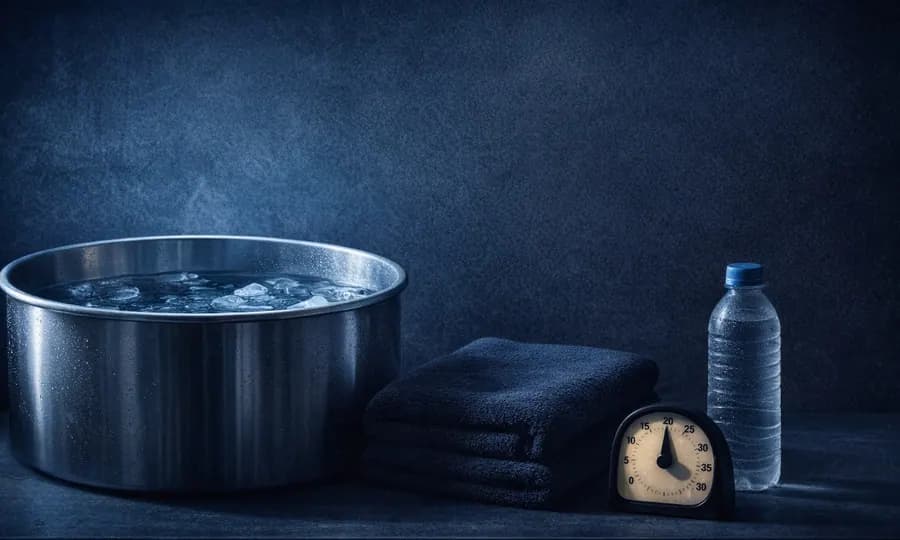
Cold can sharpen alertness and teach you to stay calmer inside discomfort. It also becomes silly fast when the whole goal is proving toughness.
Cold works better as a dose than as a dare
The main effect most people notice is acute alertness
Cold water often creates a quick jump in breathing, heart rate, and alertness.
That is useful to know because it explains both the appeal and the risk: the body responds fast.
The evidence is much stronger for short-term effects than miracle claims
Cold can be a stress input. It is not strong proof that every ice bath is repairing your brain, fixing your metabolism, or making you morally superior.
Quick check
Quick check
Try this
Start with a brief cold finish
A 15 to 30 second cold finish on a normal shower is enough for a first week. If it still feels controlled, build gradually toward 60 to 120 seconds.
Try this
Keep immersion short and conservative
Immersion and open water add cold-shock and drowning risk that a shower does not. Use a supervised setup, a buddy, and an easy exit; do not use a temperature-and-time recipe as proof that the session is safe.
Try this
Never mix cold water with breath games
No deliberate hyperventilation, breath holds, or macho experiments in water. Sudden dizziness in water is a terrible trade.
Educational content only — not medical advice. If you have a condition or you’re unsure, check with a professional before trying protocols.
Key idea
What to remember
Cold is an optional alertness and tolerance drill. Start brief, stay in control, and stop long before the session turns into a stunt.