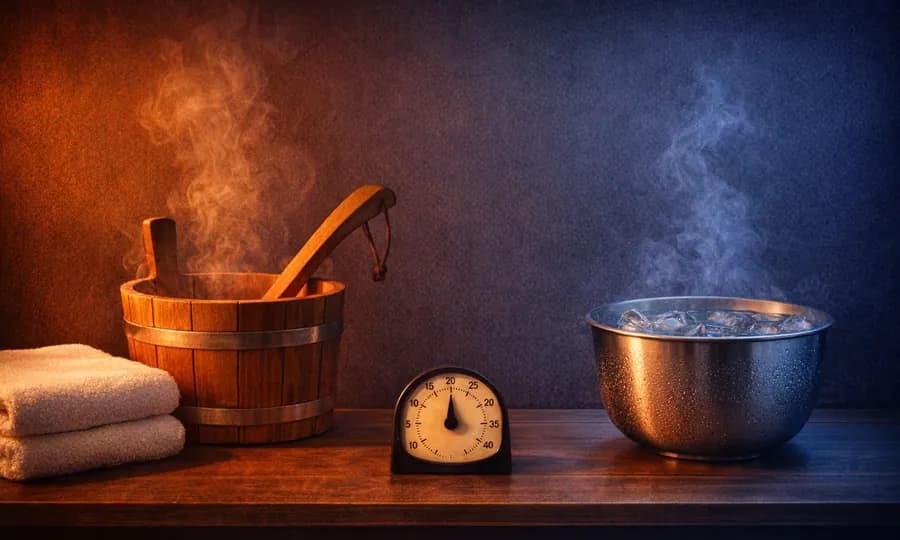
A lot of people like contrast therapy because it gives the body a clear before-and-after feeling: warm, cold, warm, cold, done. That can be enough to make it useful.
Alternating hot and cold can feel great without being magical
The best evidence is around soreness and recovery feel
Contrast therapy may help some people feel less beat up after hard training.
That is already a respectable use case. It does not need to become a detox fairy tale.
You are also practicing state shifts
Heat tends to loosen and slow you down.
Cold tends to sharpen and brace. Alternating them creates a controlled switch between those states, which is one reason some people find the protocol satisfying.
Quick check
Quick check
Try this
Start with comfortable transitions
Start with brief warm and cool periods that remain comfortable. There is no universal round count or timing that makes contrast safe for every person.
Educational content only — not medical advice. If you have a condition or you’re unsure, check with a professional before trying protocols.
Try this
Match the finish to the moment
Some people prefer a cool finish for alertness and a warm finish for comfort. Treat that as a preference, not a guaranteed nervous-system effect.
Try this
Do not let recovery tools sabotage training goals
If muscle growth is the main goal, do not make aggressive cold exposure the default immediately after every lifting session. Some cooling can dampen parts of the adaptation signal.
Key idea
What to remember
Contrast therapy is a recovery tool, not a cleansing ritual. Keep it simple, keep it repeatable, and use it for how you feel rather than for fantasy claims.