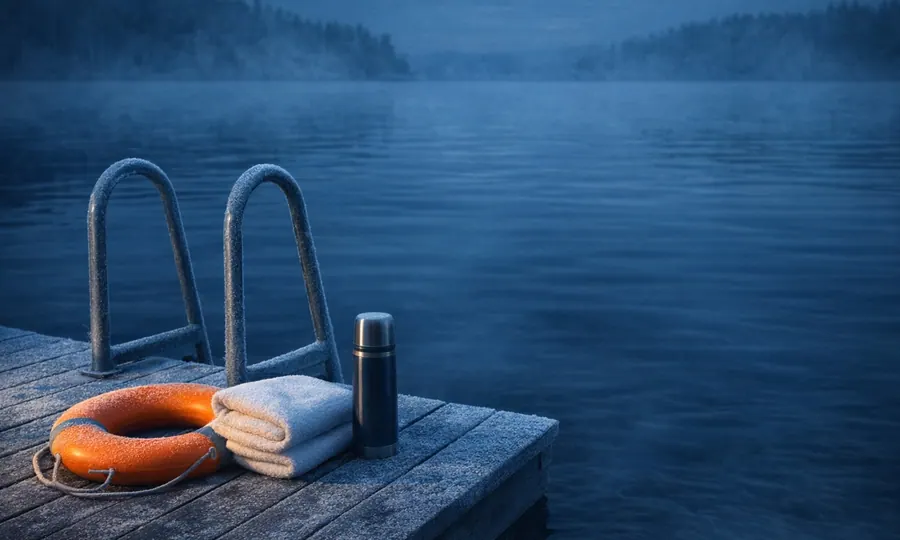
Open water and sudden immersion can create an involuntary gasp, panic, and loss of control very quickly. That is why cold-water safety deserves its own lesson.
Cold water is different from cold air or a cold shower
The first danger is the shock response
Cold water can spike breathing and heart rate right away. That first minute matters because it can wreck judgment before the person has even decided what to do next.
Quick check
Quick check
Try this
Do not enter unknown cold water alone
Use a buddy, know the exit, and treat life jackets and controlled conditions as intelligence, not embarrassment.
Try this
Never add breath-hold or hyperventilation games
The combination of sudden cold water and altered breathing can go bad fast. Keep the protocol boring on purpose.
Educational content only — not medical advice. If you have a condition or you’re unsure, check with a professional before trying protocols.
Key idea
What to remember
Cold-water shock can beat toughness. Respect the first-minute breathing response, use controlled conditions, and leave the stunt version alone.