Game stores are designed to make spending feel smaller, faster, and more normal.
That does not make every purchase bad. It means the store deserves rules.
Manipulation Defense / Card lesson
Protect real money from soft currencies, loot boxes, battle passes, and pressure loops.
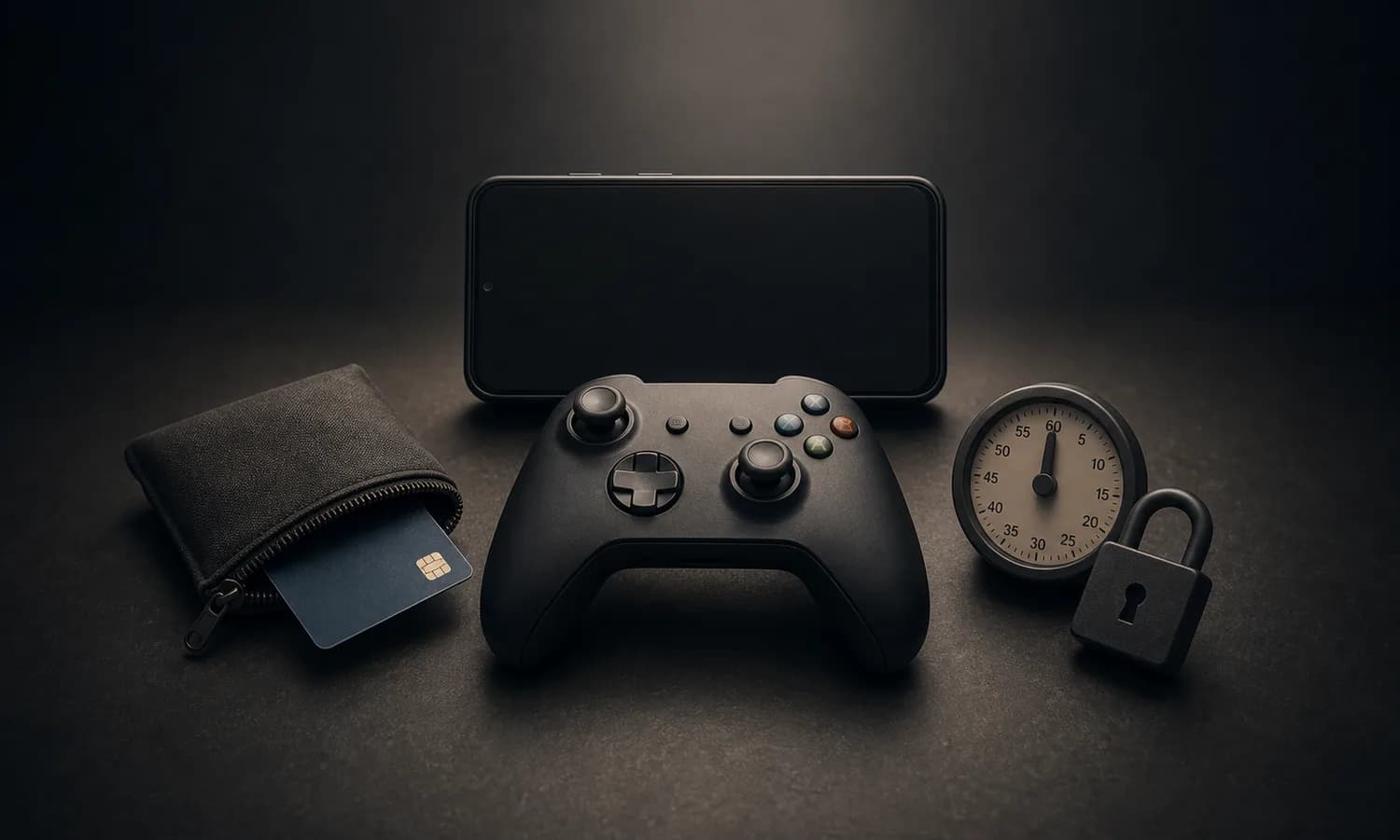
Game stores are designed to make spending feel smaller, faster, and more normal.
That does not make every purchase bad. It means the store deserves rules.
Coins, gems, shards, points, bundles, and bonus packs add distance between the click and the real money.
That distance makes spending harder to track.
Loot boxes combine money with uncertain reward.
Research links loot-box purchasing with gambling-like risk patterns, especially in younger and vulnerable players.
Money + random reward = hard boundary.
Quick check
Try this
Pick a monthly game-spend cap in real currency.
Use the smallest number you would be fine seeing on a bank statement. If you would hide the number, it is too high.
Try this
Remove saved cards from the platform or require a password for purchases.
The goal is not pain. The goal is one pause before money leaves.
Try this
Any limited-time bundle, creator code, loot box event, or battle-pass upgrade waits 24 hours.
A good purchase survives daylight.
Key idea
Game spending gets risky when real money becomes soft currency and random rewards become urgency.
Set the cap before the store opens. Add friction before the click.
Real currency first. Random rewards last.