Games can be beautiful, social, and genuinely restorative.
The issue is when play gets wrapped in systems that keep you checking, chasing, or paying after the fun is gone.
Manipulation Defense / Card lesson
Game reward systems can turn fun into checking, grinding, spending, and fear of falling behind.
Games can be beautiful, social, and genuinely restorative.
The issue is when play gets wrapped in systems that keep you checking, chasing, or paying after the fun is gone.
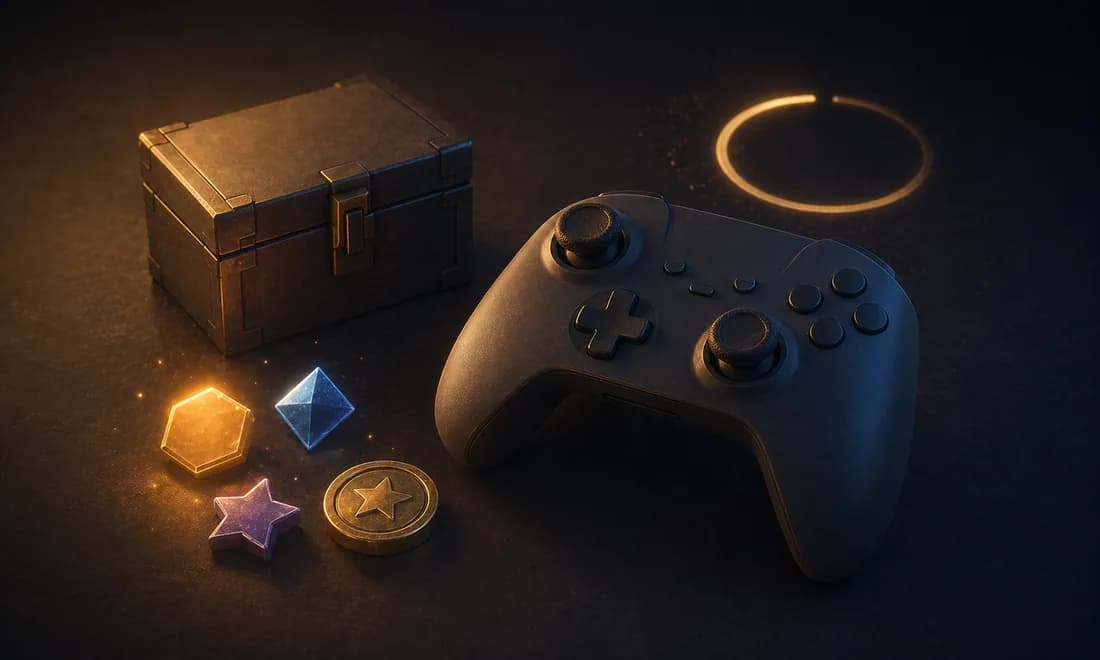
Loot boxes and some game reward systems use random rewards.
That means the next pull might be the good one, which is why the loop can keep feeling unfinished.
Loot-box studies link paid random rewards with gambling-like risk patterns.
Hing et al. (2022) found loot-box purchasing was associated with higher odds of problem gambling in adolescents, even after controlling for money gambling.
Money plus random reward is the risky combination.
Quick check
Try this
Before buying gems, coins, shards, or bundles, write the real currency cost.
If the game hides the conversion, the conversion is part of the trap.
Try this
Am I playing because this is fun, or maintaining because I fear falling behind?
If the answer is maintaining, the game owns part of your schedule.
Key idea
Good games give you agency. Predatory loops make leaving feel like losing.