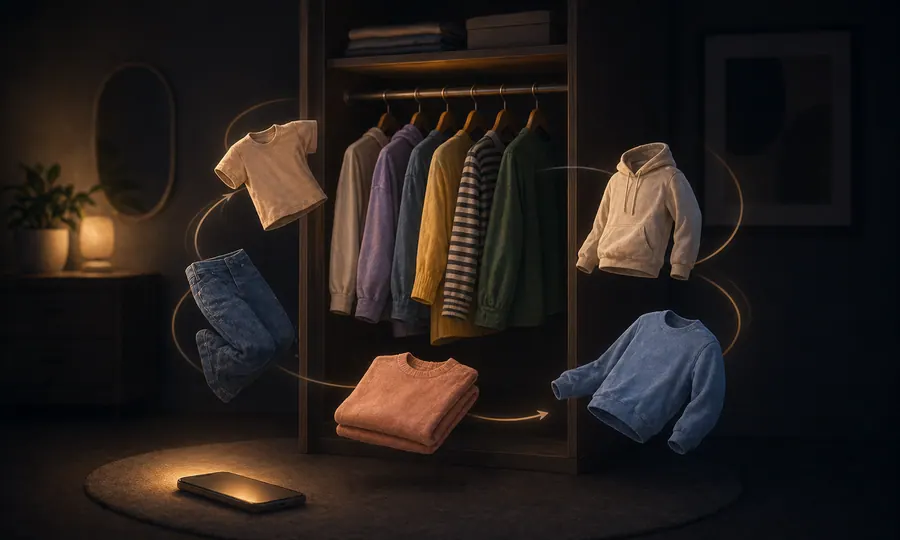
The price is low, the novelty is high, and the future pile in the corner is apparently not invited to the decision.
Cheap novelty can feel like a reset
Low price lowers the argument
Fast fashion shrinks the distance between seeing, wanting, buying, and replacing.
When the cost feels tiny, the purchase does not need to defend itself for very long.
The deeper hook is identity refresh
A microtrend can sell a quick feeling: new season, new body, new vibe, new version of you.
That is powerful when you feel bored, behind, insecure, or ready to become someone else by Friday.
Fast-fashion research often points to novelty, social influence, price sensitivity, and identity expression as major purchase drivers.
Quick check
Knowledge Check
Try this
Use the ten-wear test
Before buying, ask:
Can I see myself wearing this ten times with clothes I already own?
If not, it may be a mood purchase wearing a fashion costume.
Try this
Save it for 72 hours
Save the item and wait three days.
If it still fits your real wardrobe, consider it. If the desire fades, the feed was doing most of the work.
Key idea
What to remember
Fast fashion sells cheap identity refresh. A slower wardrobe gives your actual life more voting power.