The notebook, lamp, jacket, kitchen tools, desk setup, and water bottle all look right.
Suspiciously, becoming that person also seems to require a lot of checkout pages.
Manipulation Defense / Card lesson
Aesthetic identity gets expensive when buying the costume replaces practicing the life.
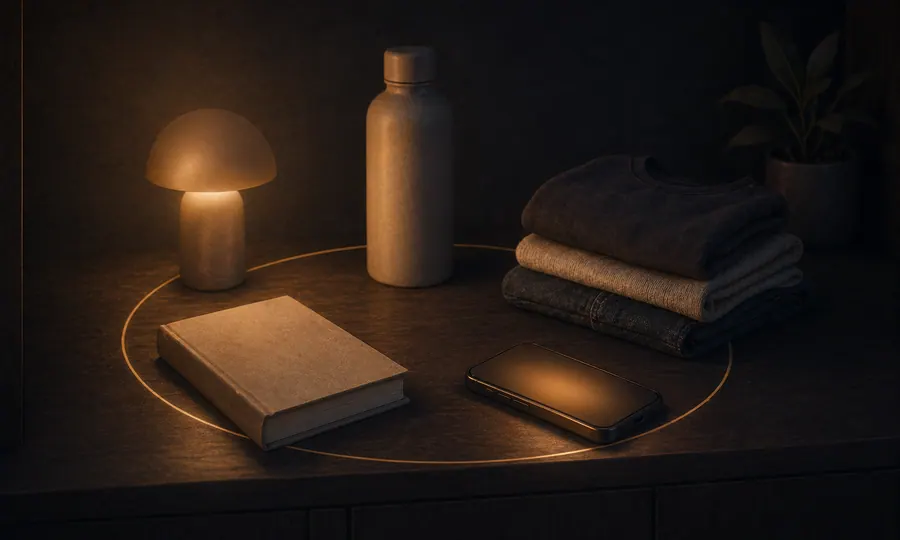
The notebook, lamp, jacket, kitchen tools, desk setup, and water bottle all look right.
Suspiciously, becoming that person also seems to require a lot of checkout pages.
Consumer culture often sells objects as symbols of who you are or could become.
That can be useful when objects support action. It gets expensive when display replaces practice.
Buying the runner kit is easier than running. Buying the chef tools is easier than cooking. Buying the perfect desk is easier than doing the work.
The object gives a quick identity preview. The behavior asks for rent.
Russell Belk's work on the extended self shows that possessions can become part of the self-story, especially when they signal group membership or aspiration.
Quick check
Try this
Before buying the object, name the behavior it helps.
This helps me cook twice a week is different from This makes me look like someone who cooks.
Try this
Try the behavior for seven days using your current stuff.
If the behavior survives, upgrade the tool. If it dies, the purchase was probably the fun part.
Key idea
A useful identity grows from repeated action. The aesthetic can come later, preferably after it has earned rent.