Most of it happens automatically in the background.
But breathing is one of the few body systems you can change on purpose in real time. That is what makes it so useful.
Breathing / Card lesson
Breathing affects air flow, body signals, and nervous-system state all at once.
Most of it happens automatically in the background.
But breathing is one of the few body systems you can change on purpose in real time. That is what makes it so useful.
A big part of the urge to breathe comes from carbon dioxide building up, not just from low oxygen.
That is why rushed, panicky breathing can make you feel worse fast. The useful takeaway is simple: slower, steadier breathing often helps the body calm down.
When the breath stays high in the chest, the whole pattern often feels tighter and more urgent.
A lower breath that lets the belly or lower ribs move usually feels calmer. Most people drift into chest breathing without noticing.
Try this
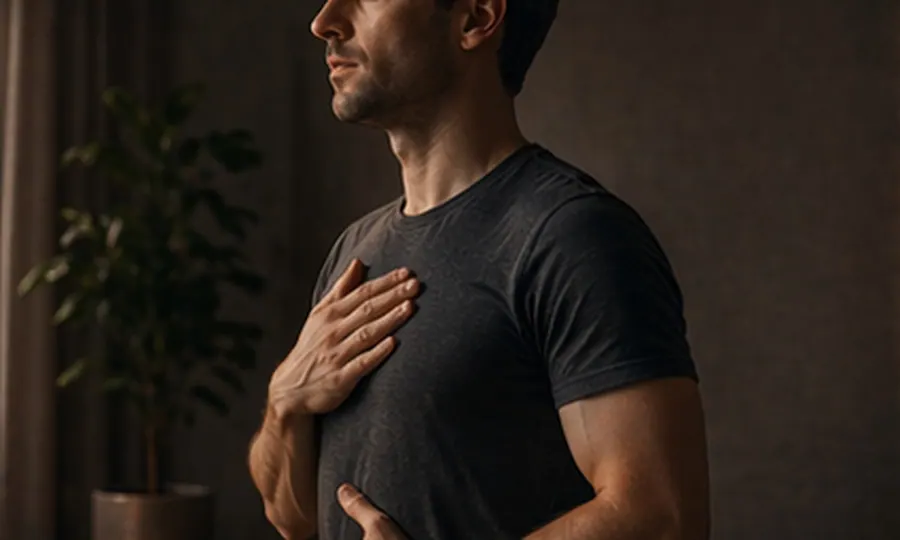
Place one hand on your chest and one on your belly. Take an easy breath. If your chest hand moves first, try letting the lower hand move more on the next few breaths.
Key idea
If the breath gets fast, high, and tight, the whole body usually feels worse. Use the chest-versus-belly check, then aim for slower breaths with more movement lower down.