Sleep debt is the tiredness that builds when you keep sleeping less than your body needs.
The risky part is that you can feel mostly fine while attention, mood, hunger, and decision-making quietly get worse.
Sleep / Card lesson
Learn why repeated short nights can impair attention before you feel fully exhausted, then use a realistic recovery block instead of one heroic sleep-in.
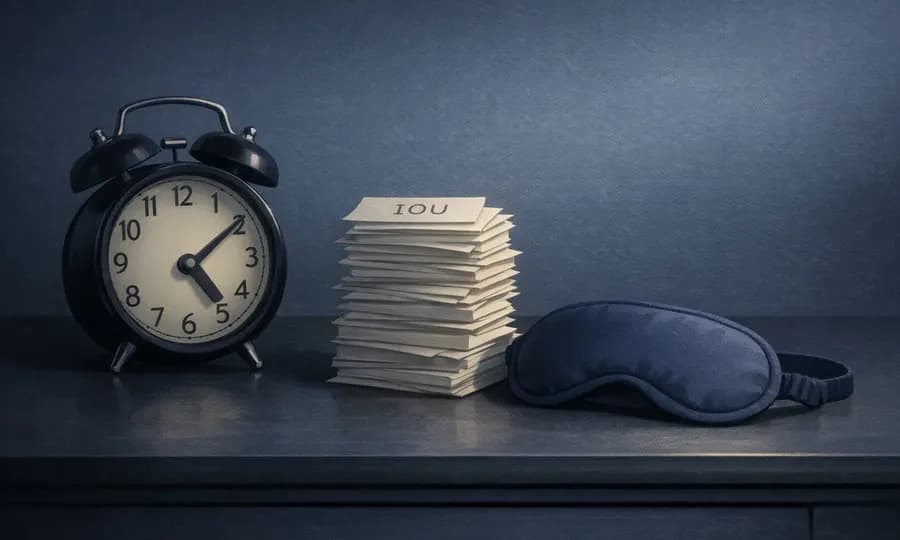
Sleep debt is the tiredness that builds when you keep sleeping less than your body needs.
The risky part is that you can feel mostly fine while attention, mood, hunger, and decision-making quietly get worse.
Van Dongen et al. (2003) kept adults on 4, 6, or 8 hours in bed for 14 days.
The 8-hour group stayed stable. The 6-hour group declined day by day.
By day 14, the 6-hour group performed about as poorly on attention tests as people kept awake for 48 hours.
Most of them did not feel as impaired as they were.
Moderate sleep restriction can become severe when it repeats.
Quick check
Banks et al. (2010) found that one recovery night after repeated restriction did not restore every performance measure equally. Recovery depends on how much sleep was lost and how much time the person gets back.
Think recovery block, not rescue nap.
Try this
Do this - Pick one usual wake time - Stay within one hour of it most days - Keep weekends close when possible
Why A stable wake time helps your body clock and makes sleep debt easier to control.
Try this
Do this Give yourself enough time in bed for the amount of sleep you usually need, for seven nights.
Do not judge the reset on night 1. Compare day 7 with day 1 for focus, irritation, cravings, and mind wandering.
Try this
For two days, compare how alert you feel with one ordinary performance cue, such as rereading, missed turns, or avoidable mistakes. Keep the note private and simple. The point is to notice a mismatch, not to score your health.
Key idea
Sleep debt is sneaky because your brain becomes worse at judging its own tiredness.
Keep wake time steady, protect a full week of recovery sleep, and avoid stacking short nights when you can.