Sleep / Deep-dive lesson

How to Recover After a Bad Night's Sleep

A next-day plan after poor sleep: use light, cautious caffeine or a short nap, lower demands, and return to a normal evening.

Published by Rebuilt6 sources
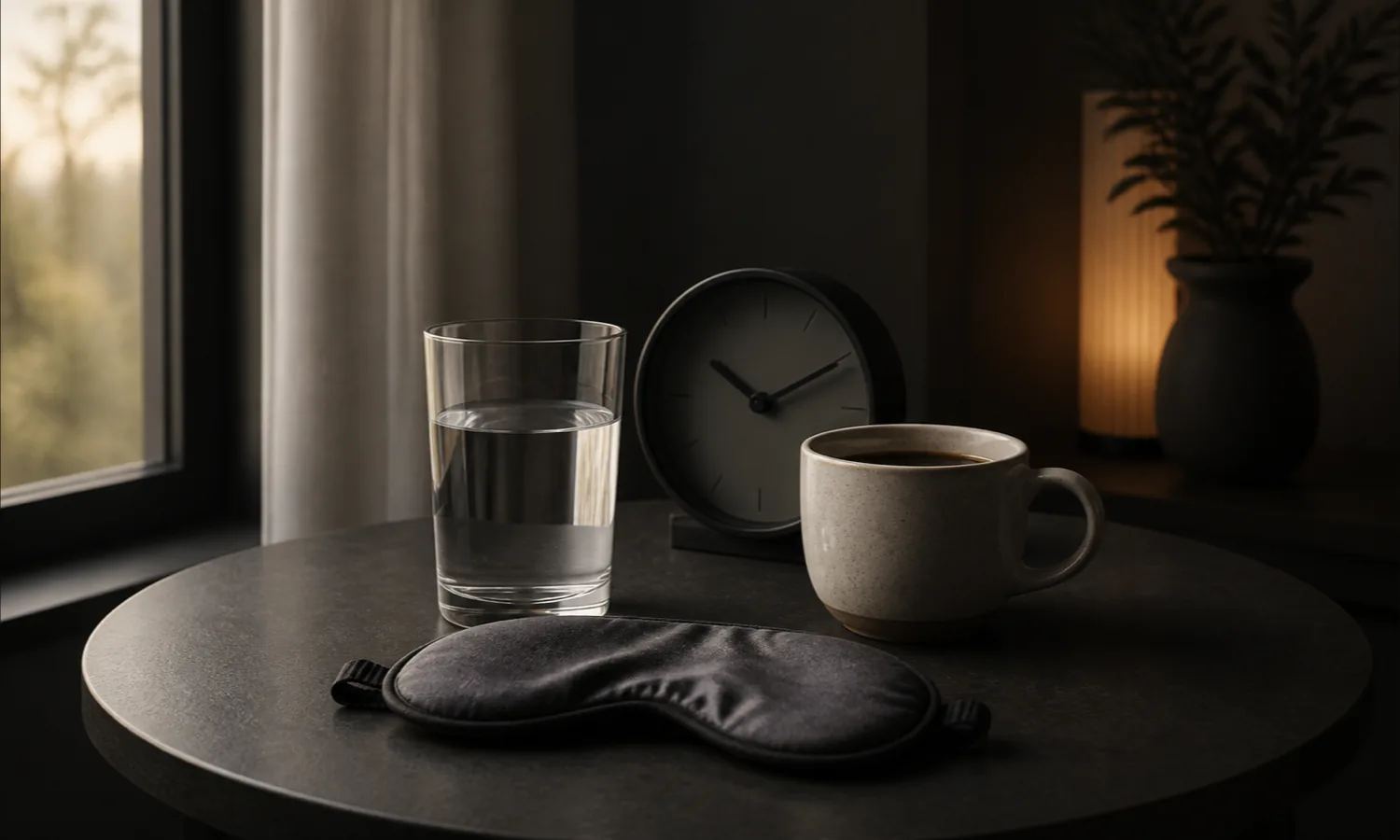
A glass of water, a small coffee, and a folded sleep mask sit in a calm pool of morning light.

Protect today without turning tonight into a rescue mission

After one bad night, use a boring five-part plan: get normal morning light, use caffeine conservatively and not late, lower the day's load, nap only if it helps without pushing bedtime, and return to your usual schedule tonight. The aim is safer functioning and a clean chance to sleep, not pretending you are fully restored.

A single rough night is different from a recurring sleep problem. If poor sleep or daytime tiredness keeps returning, move to [Why Am I Still Tired After Sleeping Enough?](/lessons/why-am-i-tired-after-sleeping-enough) and [When It's More Than Habits](/lessons/when-its-more-than-habits).

This guide is for adults. This is educational content. If you're experiencing symptoms, consult a healthcare professional.

Make safety the first decision

Sleep loss can impair attention before your own judgment catches up. In Van Dongen and colleagues' controlled study (2003), repeated sleep restriction produced cumulative performance deficits while subjective sleepiness rose less dramatically. That study examined repeated restriction, but its practical warning still matters after a bad night: feeling “not too bad” is not a safety test.

The US National Highway Traffic Safety Administration (n.d.; accessed 2026-08-30) warns that coffee alone may not make a seriously sleep-deprived driver safe and recommends stopping in a safe place if sleepiness appears while driving. If you are nodding off, missing turns, drifting across lane markings, or struggling to keep your eyes open, do not bargain with it. Delay the trip, use public transport, ask for a lift, or stop somewhere safe.

Apply the same rule to ladders, machinery, clinical work, childcare near water, and other tasks where a lapse can hurt someone. Today may need fewer demands, not better self-talk.

Try this

Use morning light and a normal wake time

Get outside after waking if you safely can. Duffy and Wright's review (2005) describes the light-dark cycle as the dominant environmental signal that aligns the human circadian system. Morning outdoor light is not an instant alertness cure, but it reinforces “daytime now” and supports a return to your usual schedule.

Avoid turning one poor night into a large schedule swing. A modest extra lie-in may be realistic, but sleeping far into the day can make your next bedtime less predictable. If you use your phone as an alarm, stand up, open the curtains, and put the phone down before feeds take over; [How to Stop Checking Your Phone First Thing](/lessons/how-to-stop-checking-your-phone-first-thing) offers a cue-based setup.

Eat and hydrate normally. You do not need to add a cleanse, punishing workout, or perfect “sleep recovery” breakfast.

Caffeine can help alertness and still charge interest tonight

Use your usual amount or less, earlier in the day. Drake and colleagues (2013) found that a 400 mg caffeine dose disrupted sleep even when taken six hours before bedtime in their small home-based study. That was a large fixed dose, and people vary, but it supports a conservative cutoff rather than all-day rescue caffeine.

If you rarely use caffeine, a bad night is not the moment to experiment with a large dose. If caffeine worsens anxiety, palpitations, reflux, pregnancy-related concerns, or interacts with medication, follow professional advice instead of this general guide.

Choose a cutoff that protects bedtime; [When to Stop Caffeine Before Bed](/lessons/caffeine-timing) helps you test one. More caffeine can mask sleepiness without restoring the sleep you lost.

A short nap is a tool, not a full repayment

If you can function safely without a nap and naps tend to delay your bedtime, skip it. If sleepiness is making the day unsafe or unusable, try a short early nap with an alarm and allow a few minutes after waking before driving or making important decisions.

Rosekind and colleagues (1995) reported improved later alertness and performance from planned rest in long-haul flight operations, while also noting sleep inertia after waking. That evidence comes from a specialised operational setting; it supports cautious use of a short nap, not a universal “perfect nap” number.

Use [Nap Without Wrecking Tonight](/lessons/napping-science) for the full trade-off. Avoid a long late-afternoon sleep unless a clinician or shift-work plan tells you otherwise.

Try this

Lower the load and leave tonight ordinary

Decide what truly has to happen today. Move one high-stakes decision, shorten one meeting, use checklists for routine work, and tell a relevant person that you are running below baseline. This is risk management, not weakness.

Tonight, return to your normal wind-down and roughly normal bedtime. Do not go to bed hours early unless you are genuinely sleepy, and do not chase sleep with alcohol or unprescribed sedatives. Banks and colleagues (2010) found that one recovery night did not restore every measured function after repeated restriction, so treat recovery as a sequence of ordinary sleep opportunities rather than one heroic night.

If the bad night becomes a bad week, stop treating it as an isolated event. Recurrent difficulty deserves a broader look.

Key idea

The next-day plan

  1. Safety first: do not drive or do hazardous work while fighting sleep.
  2. Anchor the morning: get outdoor light and keep wake time reasonably familiar.
  3. Use caffeine early and conservatively.
  4. Nap short and early only when the trade-off makes sense.
  5. Reduce today's stakes, then give tonight a normal chance.

You do not need to win the day after poor sleep. You need to get through it safely without making the next night harder.

Sources

  1. Van Dongen H.P.A. et al. (2003) — Cumulative effects of chronic sleep restrictionVan Dongen H.P.A. et al. (2003). Sleep, 26(2), 117-126.pubmed.ncbi.nlm.nih.gov
  2. Banks S. et al. (2010) — Recovery after chronic sleep restrictionBanks S. et al. (2010). Sleep, 33(8), 1013-1026.pubmed.ncbi.nlm.nih.gov
  3. Rosekind M.R. et al. (1995) — Strategic naps in operational settingsRosekind M.R. et al. (1995). Journal of Sleep Research, 4(S2), 62-66.pubmed.ncbi.nlm.nih.gov
  4. Drake C. et al. (2013) — Caffeine 0, 3, or 6 hours before bedtimeDrake C. et al. (2013). Journal of Clinical Sleep Medicine, 9(11), 1195-1200.pubmed.ncbi.nlm.nih.gov
  5. Duffy J.F. and Wright K.P. Jr. (2005) — Human circadian entrainment by lightDuffy J.F. and Wright K.P. Jr. (2005). Journal of Biological Rhythms, 20(4), 326-338.pubmed.ncbi.nlm.nih.gov
  6. National Highway Traffic Safety Administration (n.d.; accessed 2026-08-30) — Drowsy drivingNational Highway Traffic Safety Administration (n.d.). Drowsy Driving. Accessed 2026-08-30.nhtsa.gov

Further reading