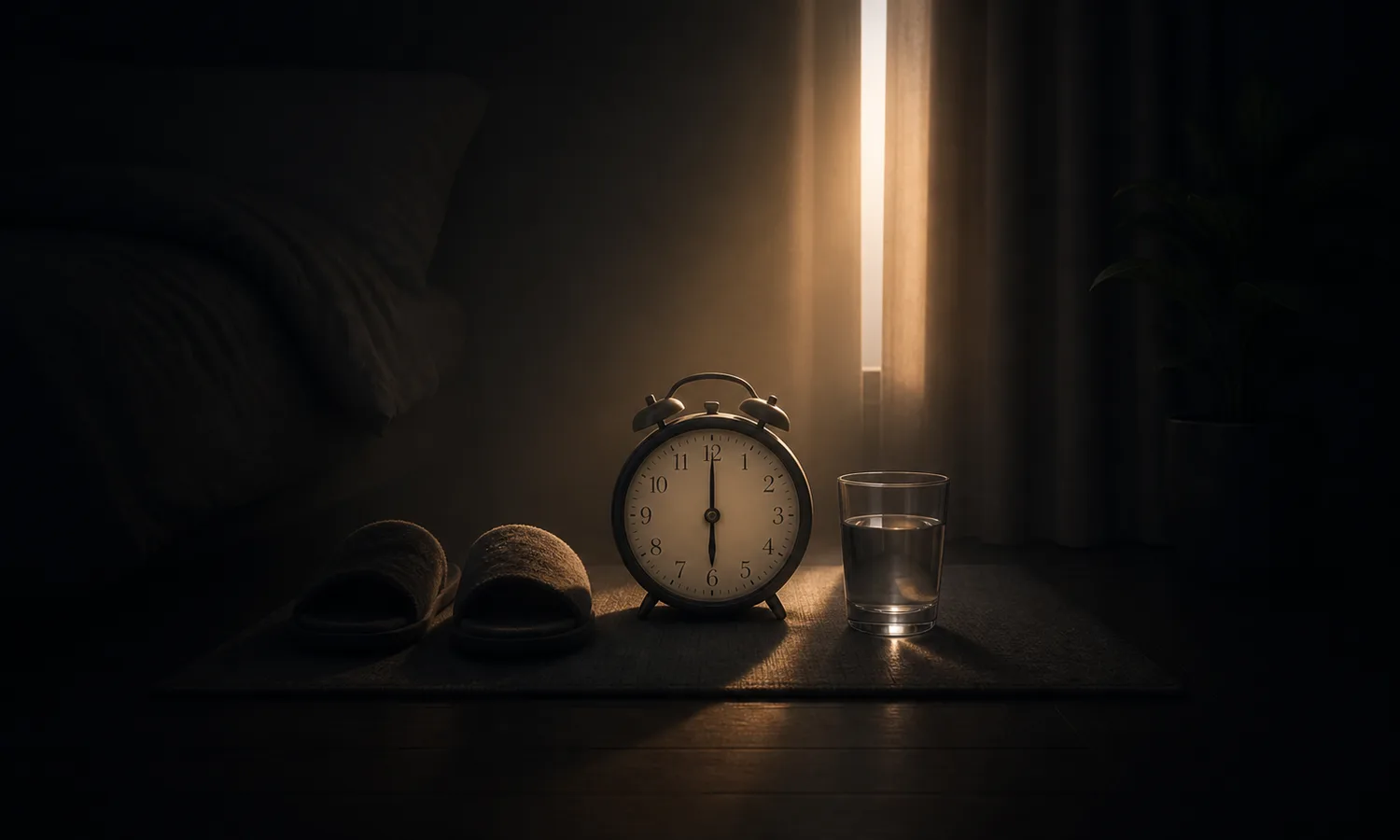
A dim room, a phone screen, then an indoor desk can leave the body clock with a weak start signal. Morning light makes the start easier to read.
Morning needs a clear start
Light sets the clock
Duffy and Wright (2005) describe light as a main timing signal for the circadian system. Outdoor morning light gives that system a clearer timestamp than a dim room.
A clear morning signal makes the evening sleep signal easier to find
Morning light and evening dimness act on the same timing system. One marks the start of day; the other stops extending it.
Quick check
Clock check
Try this
Get outside in the first hour
Use a few minutes of outdoor light after waking. If outside is not available, use the brightest window you have.
Try this
Use the window fallback when outside is not possible
Sit near the brightest available window for a few minutes. It is not as strong as outdoor light, but it is better than starting the day in a dim room with no signal.
Key idea
Give the clock a clear morning start
Give the clock a clear morning start.