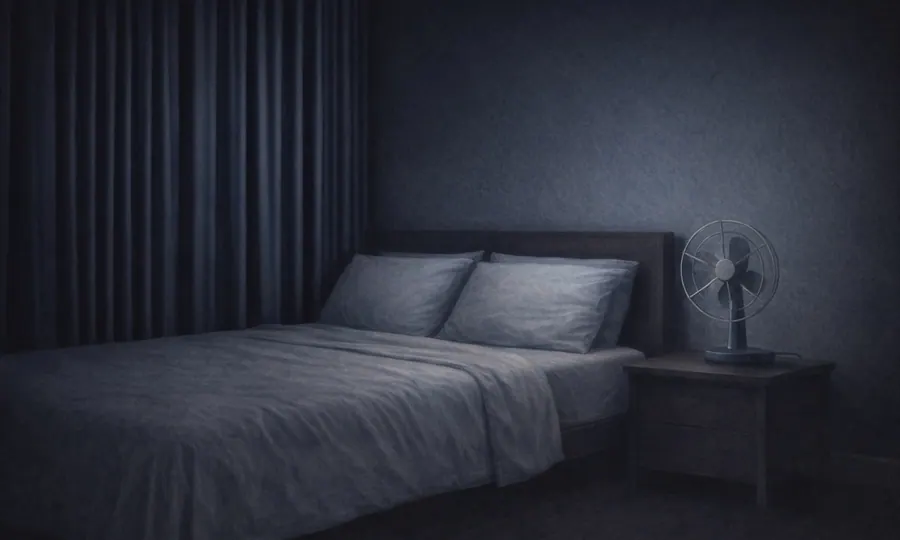
Heat, stray light, changing noise, or the phone near the pillow can keep asking for attention. Pick the easiest one to reduce tonight.
Notice what keeps the room active
Make cooling easier
Haghayegh et al. (2019) describes temperature change as part of the body's sleep transition. Try lighter bedding, a fan, or a cooler room if the bed feels too warm.
Use comfort instead of a universal target
There is no single room number that fits every person, season, or bed. Adjust the room, bedding, or airflow until you are comfortable enough to settle without feeling too warm.
Reduce room light that reaches you at night
Gooley et al. (2011) found that ordinary room light before bedtime can delay melatonin onset. That study did not test every tiny LED. Reduce the light that reaches your eyes, especially if it is bright enough to bother you.
Quick check
Temperature check
Try this
Make changing noise steadier
If traffic, doors, or other changing sounds keep pulling your attention, try one available buffer: a fan, a closed door, earplugs, or quiet steady sound. The goal is fewer changes, not perfect silence.
Bed associations affect sleep quality
Espie et al. (2012, Sleep) documented how stimulus control, what the brain learns a space is for, affects insomnia. When bed gets associated with scrolling, work, or television, it stops being a clear sleep cue. The brain stays more alert there than it should.
Quick check
The light question
Try this
Do a darkness audit tonight
Turn off all the lights and see what still glows. Cover standby LEDs with black electrical tape. Unplug what you can. Get a sleep mask or blackout curtain if streetlight bleeds in. One pass can change the whole night.
Try this
Cool the room 30 to 60 minutes before bed
Pick one move tonight: fan on low, window cracked, thermostat down, or lighter duvet. You do not need to hit a perfect temperature. You need to give the body a chance to cool before asking it to sleep.
Try this
Use steady noise to mask random noise
If the environment has unpredictable sounds, use a fan, white noise machine, or brown noise. Brown noise has deeper frequencies that can mask low-frequency sounds like traffic or a partner's snoring. The goal is a steady background, not silence.
Try this
Charge the phone in a different room
If you use it as an alarm, buy a cheap alarm clock. Remove the excuse and the temptation goes with it. This also starts breaking the bed-phone association.
Key idea
Make the room cooler, darker, or steadier
Make the room cooler, darker, or steadier. One fix is enough to start.