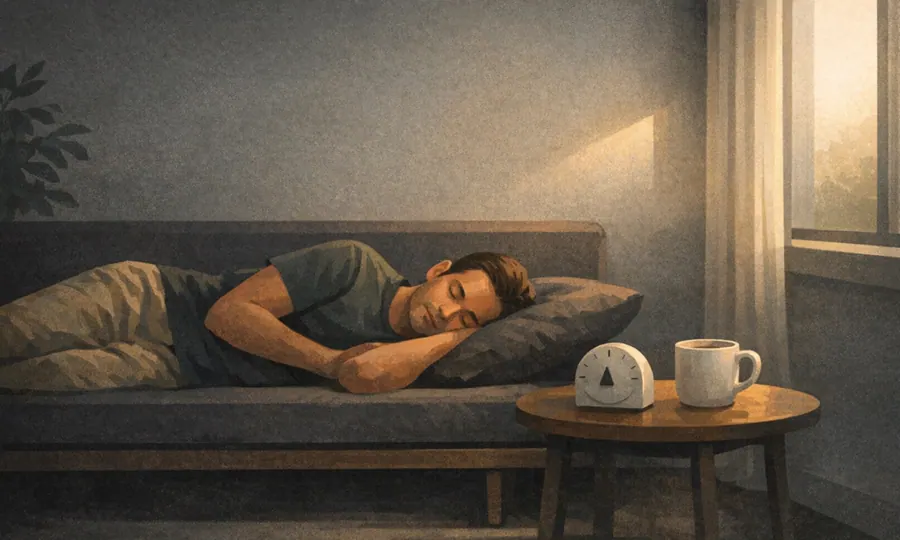
Naps work great when they stay short and early. Let them sprawl and they can leave you groggy now and less sleepy tonight.
Short and early usually works better
Short naps can work surprisingly well
A quick nap can sharpen you fast.
You do not need a luxury routine. You just need to keep it short enough that it helps instead of wrecking you.
The real win is feeling more switched on
The value of a short nap is simple: you wake up clearer instead of dragging the same fog through the afternoon.
Quick check
Nap Check
The grogginess trap: Sleep Inertia
Ever woken from a nap feeling worse than before?
That is the grogginess trap. It usually happens when the nap runs long enough for you to get pulled out of deeper sleep.
Stay in the Light Zone
The sweet spot is light sleep. That is why the safest power nap is usually under 20 minutes.
Quick check
The Inertia Trap
The Nap Sweet Spot
The shape is simple: short naps usually help, medium naps often feel awful, and a full 90-minute cycle can work if you truly have the time.
Late naps steal from tonight
Late naps steal from tonight because they take the edge off your sleepiness too late in the day.
The Coffee Nap
Coffee takes a little while to kick in. That is why a coffee right before a short nap can line up surprisingly well for some people.
Try this
Use the 20-minute nap
Set an alarm for 20 to 25 minutes total.
The goal is light sleep: enough to refresh you, not long enough to wake from deep sleep and feel heavy.
Try this
Keep naps earlier when you can
Early afternoon works well for many people. If a nap makes bedtime harder, move it earlier or shorten it rather than treating one clock time as a universal cutoff.
Try this
90-Minute Cycle
Really wrecked? A short nap may not be enough. If you actually have the time, a full 90-minute cycle is the cleaner long option.
Try this
Post-Nap Sunlight
Get 5-10 minutes of outdoor light or stand by a bright window right after the nap. Light tells your brain this was a reset, not the start of evening mode.
Try this
Use bedtime as feedback
There is no universal 3 PM cutoff. If a late nap repeatedly delays your main sleep, move it earlier, shorten it, or skip it that day.
Key idea
What to remember
Keep naps short, keep them earlier, and treat 30 to 60 minutes like the danger zone. If you nap, wake all the way back up on purpose.
Short and early usually wins.