The number feels precise: '6h 42m, 18% deep sleep, 22% REM.'
But a wrist tracker is still inferring sleep from movement and heart signals, not reading the brain directly. That makes some outputs useful and others much shakier than they sound.
Sleep / Card lesson
Wearables are useful for trend lines and consistency, not as judges of exactly how well you slept.
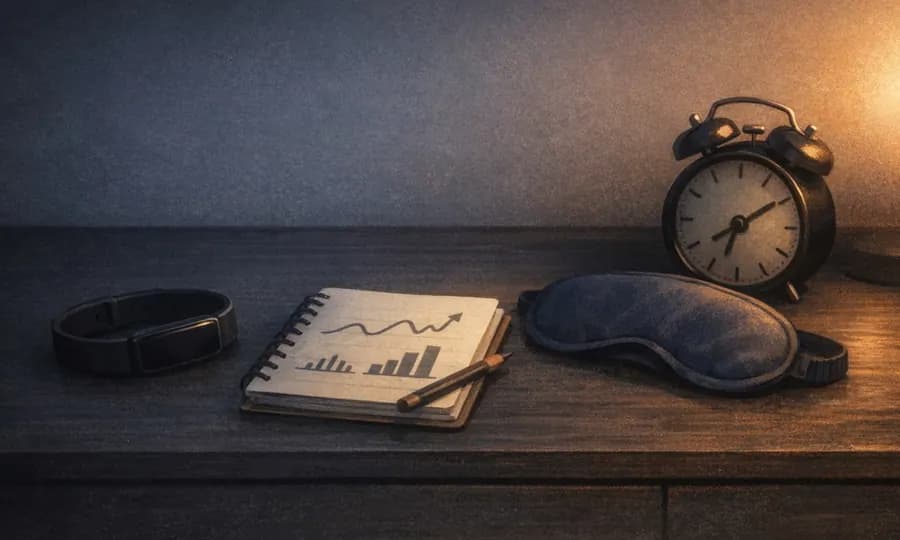
The number feels precise: '6h 42m, 18% deep sleep, 22% REM.'
But a wrist tracker is still inferring sleep from movement and heart signals, not reading the brain directly. That makes some outputs useful and others much shakier than they sound.
The lab gold standard for sleep staging is polysomnography, which measures signals like brain waves, eye movement, and muscle tone directly.
Most consumer wearables do not have access to those signals.
Wearables mostly use movement plus heart-rate patterns to estimate sleep.
That is why lying still but awake can easily get scored as light sleep, and why stage breakdowns are much weaker than they look.
Quick check
Total sleep time and consistency trends can be useful.
Specific stage percentages like deep or REM are much less reliable. That does not make the tracker useless. It just changes what you should trust it for.
For some people, tracking flips from helpful to stressful.
If a bad score changes your mood before the day even starts, the device may be creating anxiety instead of clarity.
Focus on the signal: total sleep time, bedtime and wake-time consistency, and recovery trends like resting heart rate.
Treat the noisy stuff more cautiously: deep or REM percentages, one-night scores, and dramatic recovery labels.
Try this
Ignore any one night unless something unusual clearly happened. Look at 7-day or 30-day trends instead. Trends are where trackers are most helpful.
Try this
Do not check the score right away. Give yourself at least 30 to 60 minutes first. This stops one shaky number from setting the mood for the whole morning.
Try this
If your device tracks HRV or resting heart rate, those trend lines can be more useful than the sleep score itself. Compare them to your normal baseline instead of reacting to one weird number.
Try this
If your tracker shows temperature, compare spikes with real-world factors like alcohol, a late meal, illness, travel, or a warm room. Use the device like a clue tool, not a judge.
Try this
If the tracker is starting to run you, take it off for a few nights or a week. Relearn how rested, heavy, or wired you feel without asking the device first.
Key idea
Wearables are best for trends, not truth. Use them to watch consistency and recovery over time, not to let one shaky score tell you how the day should feel.