You sat down to work and your eyes snagged on the mug, the unopened envelope, the cable nest. Each one asked a tiny question before you typed a word.
The goal is not a showroom desk. It is fewer unnecessary decisions sitting at eye level.
Space & Systems / Card lesson
Clear one useful surface, give stray items a route home, and make the next room reset easier.
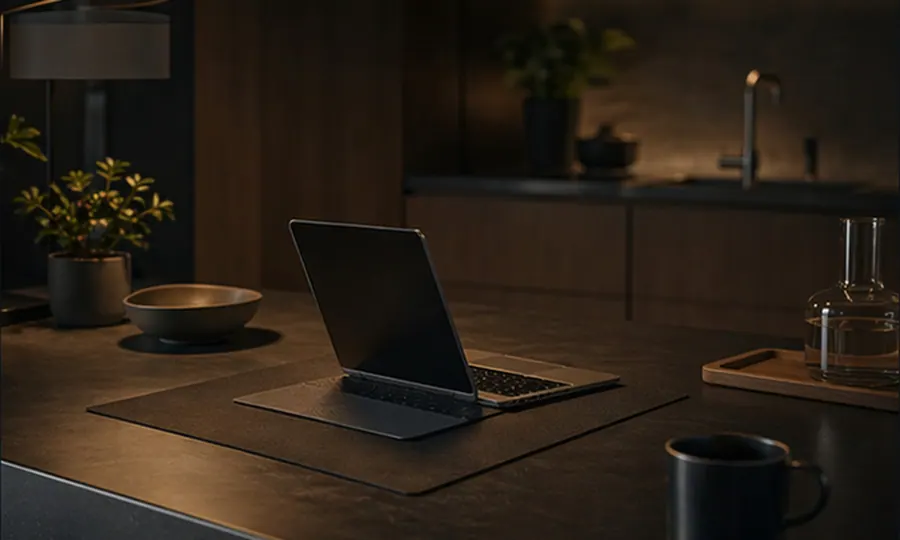
You sat down to work and your eyes snagged on the mug, the unopened envelope, the cable nest. Each one asked a tiny question before you typed a word.
The goal is not a showroom desk. It is fewer unnecessary decisions sitting at eye level.
Stephanie McMains and Sabine Kastner found that competing objects in view pull on the same attention you are trying to spend on one task.
That is why a clear surface often feels mentally quieter even when nothing else changed.
A good work surface is not empty for aesthetic reasons.
It is empty enough that the current thing has space to happen cleanly. The active project wins. The rest gets parked.
Quick check
Try this
Only one active project, device, or meal setup gets prime surface space. Anything else goes in a tray, shelf, or drawer until it is its turn.
Try this
Reset the surface once before the work block and once after. That tiny ritual is better than waiting for a once-a-week cleaning mood.
Try this
Mugs and glasses create fake background mess fast. A one-cup rule is often enough to stop the drift.
Try this
A small cable box, hook, or clip can make the whole setup feel calmer. Cable chaos reads louder than it is.
Try this
Look straight ahead from where you work. If the centerline is full of junk, move the nonessential stuff out of that direct view first.
Key idea
A clean surface is not a morality test. It is a friction tool. Give the current job the space, and move the background noise out of the hot zone.
Clear enough beats perfect.