If the sink is loaded, the bag is not packed, surfaces are noisy, and the laptop is still glowing with open loops, tomorrow starts reactive before you are fully awake.
A short closing shift lowers that launch cost.
Space & Systems / Card lesson
Use a short evening closing shift to clear a few pressure points and make tomorrow easier to start.
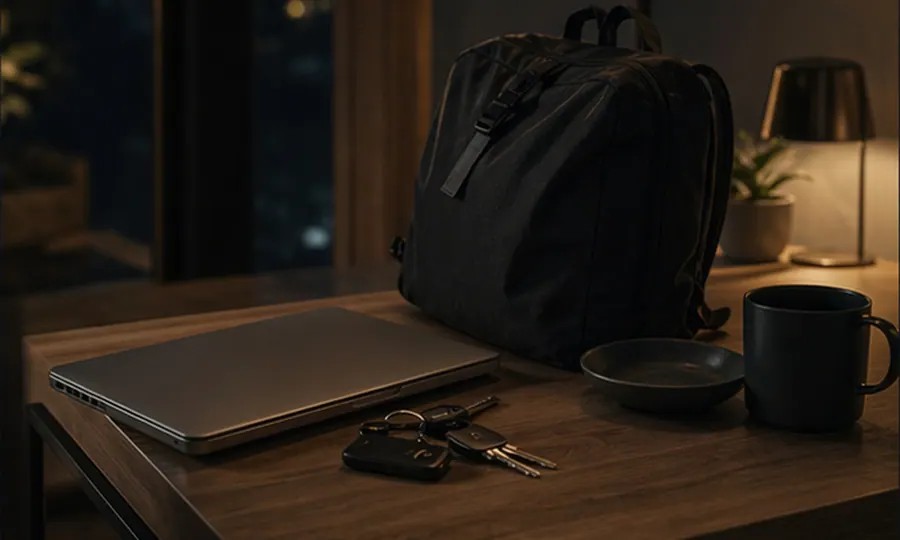
If the sink is loaded, the bag is not packed, surfaces are noisy, and the laptop is still glowing with open loops, tomorrow starts reactive before you are fully awake.
A short closing shift lowers that launch cost.
When obvious decisions are cleared the night before, the morning starts with more working attention available.
This is less about discipline and more about removing start-up tax.
Keys, dishes, bag, clothes, surfaces, and digital reset.
The exact list can change by home, but the routine only survives when it stays short enough to happen on a tired Tuesday.
Quick check
Try this
Try this order: 1. dishes or cups handled, 2. one surface reset, 3. bag and keys ready, 4. clothes or workout gear ready, 5. laptop and tabs closed. Five items is enough to change the next morning.
Try this
Use one song or a 7-minute timer. The timer matters because it tells your brain this is a handoff, not a whole second shift.
Try this
Kitchen, bedroom, or work zone is usually enough. One room that launches the next day well is still a real win.
Key idea
A home closing shift is not deep cleaning. It is a short handoff from tonight to tomorrow: clear the obvious hotspots, set the next morning up, and stop paying the same start-up tax every day.