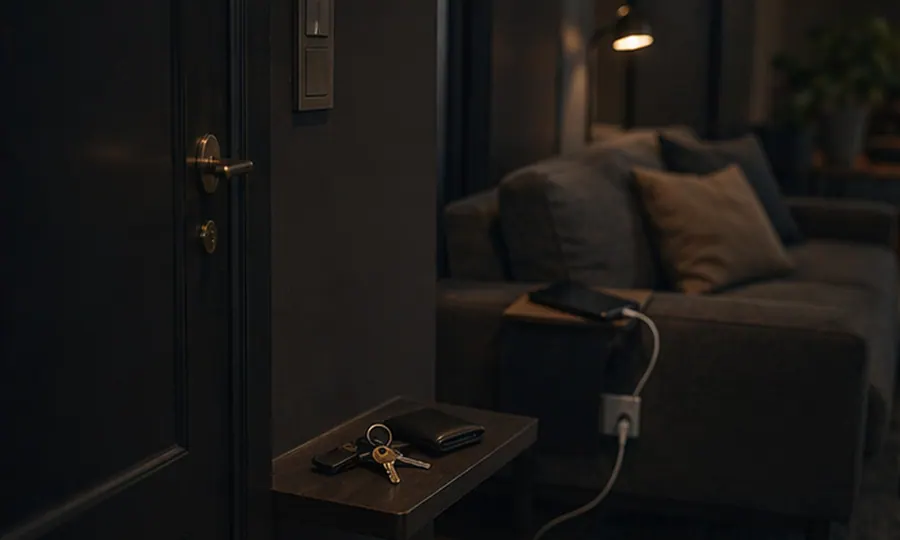
If scissors live in the office but get used in the kitchen, or chargers live in a drawer but get used beside the couch, objects keep escaping because the home is fighting the real pattern.
A lot of “messiness” is just storage in the wrong place
People repeat the easy path
Most systems fail where the return trip is longer than the use trip.
When an object is used in one place and stored in another, the tired brain often chooses leave it here for now and the pile starts growing.
Point-of-use storage beats willpower
When the object home lives close to the behavior, reset gets much cheaper.
That is why hooks by the door, baskets near the sofa, and kitchen tools near the station they belong to work so well.
Quick check
Quick check
Try this
Run a point-of-use audit
Pick one object cluster that keeps drifting: chargers, keys, receipts, shoes, papers, cleaning supplies. Ask: where does this actually get used, and what home within one step of that spot would work better?
Try this
Use the smallest believable home
A hook, tray, pouch, folder, or small basket is usually enough. Do not build a museum display for something that just needs a landing zone.
Try this
Watch the room for three days
If the item still keeps landing somewhere else, believe the evidence and move the home again. The room is giving you better data than your plan on paper.
Key idea
What to remember
Store things where they are used, not where you think they should live. Good systems follow the behavior instead of demanding a better personality.