You dropped the bags, meant to rest for an hour, woke up at 9pm with no water, no cash, no food plan, and a wrecked second day already loading.
A lot of trips get harder than necessary because day one becomes chaos instead of setup.
Travel / Card lesson
A better trip starts when the first day handles sleep, water, bearings, and logistics in the right order.
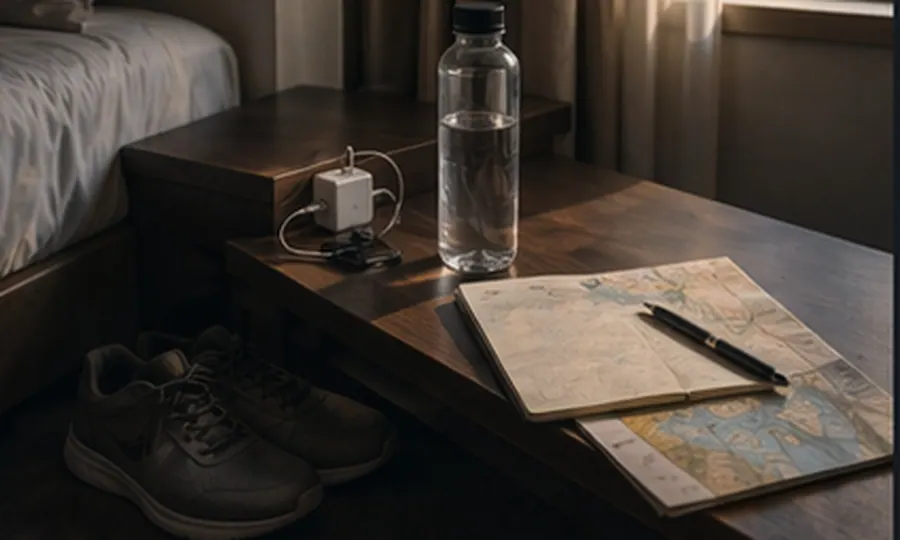
You dropped the bags, meant to rest for an hour, woke up at 9pm with no water, no cash, no food plan, and a wrecked second day already loading.
A lot of trips get harder than necessary because day one becomes chaos instead of setup.
The CDC Yellow Book's jet-lag guidance lands the same way for day one: if travel was long or time zones changed, the body needs light, movement, hydration, and a local bedtime more than it needs a heroic sightseeing effort.
Quick check
Try this
Get water, know how to pay, know how to get back to the room, and get your phone or data working. These are first-day stability moves, not errands to maybe do later.
Try this
Even a 20 to 30 minute walk outside helps you learn the area and gives the body a daylight cue. That matters a lot after long travel.
Try this
Eat something decent, shower, set alarms, and keep the first night simple. Day one is not the place to prove you are a legendary traveler.
Key idea
A good first day is not impressive. It is stabilizing: water, bearings, payment, movement, daylight, and a clean local bedtime.