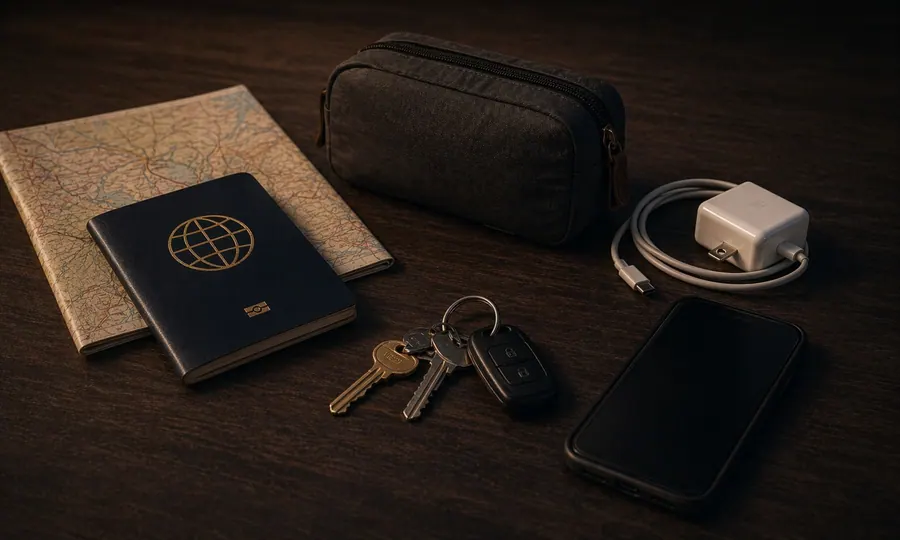
You land at midnight, the card gets declined, the map will not load offline, and the booking confirmation is in an email you cannot open.
Most travel disasters are not dramatic bad luck. They are missing setup, coming due at the worst moment.
Public field guide
Travel
Do the boring setup once so the trip itself does not have to keep paying for it.
You land at midnight, the card gets declined, the map will not load offline, and the booking confirmation is in an email you cannot open.
Most travel disasters are not dramatic bad luck. They are missing setup, coming due at the worst moment.
When money, documents, connectivity, and first-night transport are handled before departure, the trip starts with fewer live problems.
That matters because airports, delays, and unfamiliar cities already create enough noise on their own.
A fixed short list works better than trying to remember everything from vibes.
The CDC Yellow Book and the US State Department both push the same idea: prep is mostly the same every time. Documents, money, phone, medicines, address, and an arrival plan.
Quick check
What is the point of a pre-trip blueprint?
Exactly. The point is fewer avoidable failures.
Try this
Know how you are getting from the airport or station to the first bed. Save the address offline, screenshot the booking, and check what happens if you arrive late.
Try this
Passport or ID valid, payment working, first-night address saved offline, local data plan or eSIM sorted, medicines packed in the carry-on, and one backup way to access key documents.
Try this
Assume checked luggage can disappear for a day. Keep one clean change, chargers, medicine, toothbrush, and anything you truly need for the first 24 hours in the bag that stays with you.
Key idea
The trip feels calmer when the arrival, documents, money, phone, and medicines are already handled. Travel logistics is mostly about removing the obvious ways a normal day turns expensive.