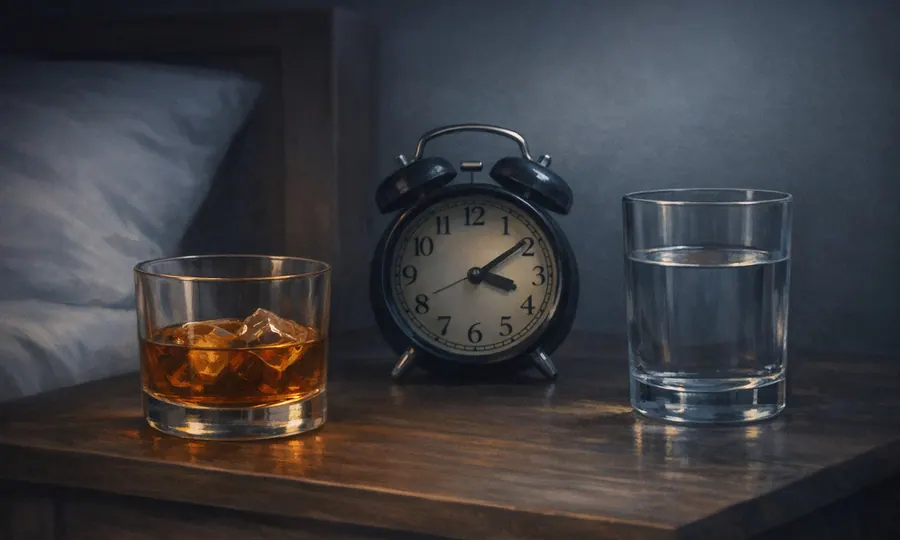
Alcohol can knock you out fast, which is why it feels helpful. But the sleep that follows is thinner and messier than it looks, especially later in the night.
Alcohol can knock you out fast. That is the last easy part
Sedation is not sleep
Falling asleep faster is not the same as sleeping well. Alcohol can make sleep start sooner while quietly making the second half of the night worse.
The first part can feel misleadingly easy
Alcohol makes drowsiness arrive faster, which is why it can feel helpful.
The problem is that the easier first half of the night often gets paid back later with lighter, more broken sleep.
Quick check
Check your knowledge
The rebound usually starts later
A few hours later, the night often flips. Sleep gets lighter, hotter, more restless, and more likely to break apart.
REM sleep often takes the biggest hit
Even a couple of drinks can shave down REM sleep, which is one reason the night can leave you feeling mentally off the next day.
Quick check
REM and Recovery
Why the 3 AM wake-up happens
As the alcohol wears off, sleep often turns light and broken.
That classic 3 a.m. wake-up is not random. It is the comedown showing up.
Try this
Leave a 3-hour buffer
If you drink, finishing earlier leaves more time before bed. Three hours is a practical buffer, not protection or a guarantee; alcohol can still fragment sleep later in the night.
Try this
Pair each drink with water
Water can support hydration, but it does not prevent alcohol-related sleep fragmentation. Use it as ordinary hydration, not as a way to cancel the alcohol.
Try this
Keep it low if sleep matters
If sleep matters that night, drinking less reduces the amount your body has to process. No number guarantees that sleep will be unaffected.
Try this
Skip the sugar pile-on
Choose a mixer that sits comfortably for you. Mixer choice does not cancel alcohol's effect on sleep, so keep the focus on the alcohol itself.
Try this
Run a recovery-day reset
If you did drink, treat the next morning like a repair window: get outside light early, hydrate, and avoid pretending the night had no cost. The goal is not punishment. It is getting the day back on track faster.
Key idea
What to remember
Alcohol can help you pass out, but it often makes the back half of the night worse. Leave a buffer before bed, keep the number low, and treat it like a tradeoff instead of a sleep tool.
The short version: faster sleep does not mean better sleep.