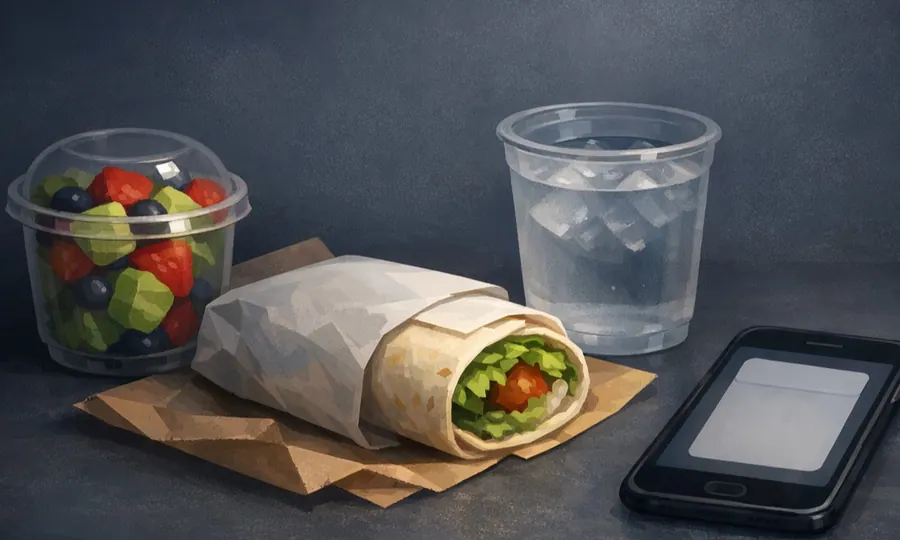
You were starving, in a hurry, and standing under the menu lights, so you said the usual: main, fries, large sweet drink. One meal does not define the week. The useful problem to solve is the rushed combo becoming the automatic order. A default helps because it gives tired, hungry you a workable choice that is already decided.
The full combo is where intake can climb
The easiest fast-food calories to overshoot are usually the full combo: main, fries, and sweet drink together.
In Kevin Hall's 2019 controlled trial, 20 adults ate about 500 more calories per day on the ultra-processed menu than on the minimally processed menu. That small study did not test one fast-food order, but it does show why the whole stack deserves attention. Start with the part of the order you repeat most often.
A simple base still works in fast food
The same food basics still help here: protein, some produce or fiber, and a non-sugary drink.
That usually means grilled chicken over crispy, a burrito bowl over a giant combo, or adding fruit or salad when it exists. Leave with a meal that actually registers, not a health-halo performance.
Quick check
Order Check
Try this
Use the Rule of Three
Build the order from three anchors: one obvious protein, one produce or fiber source, and one non-sugary drink. Example: grilled chicken wrap plus fruit and water, burrito bowl with beans and salsa, or burger plus side salad with diet soda.
You are trying to leave with a meal that feels complete, not follow a purity rule.
Try this
Choose the drink on purpose
Drinks can add a lot to the order without making it feel more like a meal. If you want fries, you might skip the large sweet drink or dessert. Water, diet soda, or unsweetened tea can be the default; if the drink is the part you actually want, choose it without turning the meal into a test.
Try this
Pre-Commit Before You Smell the Place
Decide the order before you are standing under the menu lights. Open the app, choose the steadier meal, and order that exact thing before you arrive if you can. Hunger is bad at trade-offs. Pre-commitment does the thinking earlier, when you still have one.
Try this
Create an Exit Meal
The best time to protect the next meal is before the first one ends. Keep one backup ready for later: a {{mass_g:20}} protein bar, a yogurt, fruit, jerky, or a simple grocery-store snack. That way one rushed meal does not become a full day of grazing.
Key idea
What to remember
Fast food is manageable when you stop ordering the whole pile by default. Use protein, produce, and a smart drink as the base, choose one indulgence instead of adding three, and decide before hunger starts negotiating.
The repeatable order matters more than judging one meal.