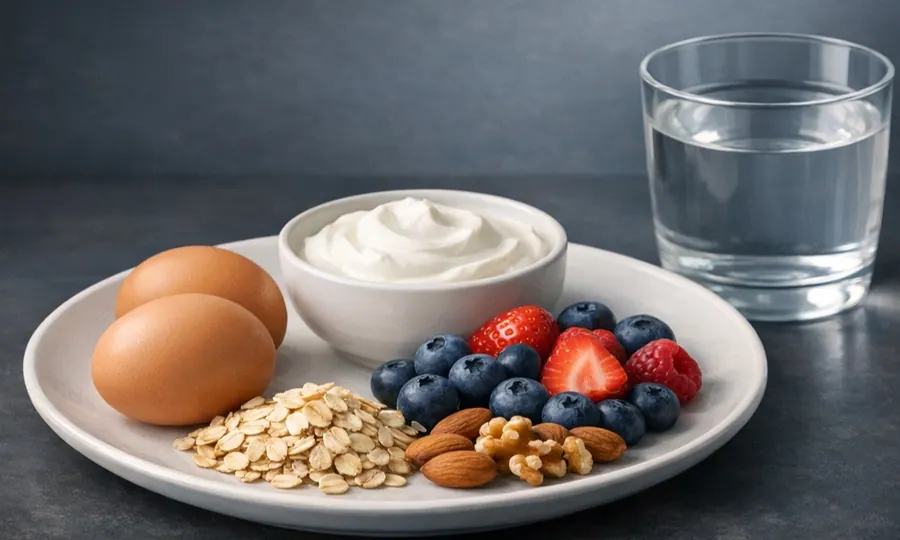
You stood there at 7pm, tired, with no idea what counts as a real meal anymore. Cut carbs, avoid seed oils, optimize everything: the advice piles up until choosing dinner feels like a test you might fail. The way out is a smaller question, not a stricter rule. Did the meal give you protein, plants, fibre, energy, and enough total food?
You opened the fridge and froze again
Use the 4-part meal check
Check the meal - Protein for fullness and repair - Plants for fibre and micronutrients - Carbs or fats for energy - Enough food to avoid rebound cravings
This is not a diet plan. It is a quick meal check.
Labels are easier to read than food marketing
The FDA's 5/20 rule is useful: 5% Daily Value is low, 20% is high.
Added sugar is still best kept under 10% of calories, which is about {{mass_g:50}} a day on a 2,000-calorie diet. For everyday packaged foods, more fiber and less added sugar usually beat the reverse. You do not need pristine ingredients. You need a faster filter.
Quick check
Food Basics Check
Try this
Use the plate rule
Make half the plate fruit or veg, one quarter protein, and one quarter starch or carb if you want it. If the meal is not a plate, use the same logic anyway: protein plus produce first, starch second.
Breakfast version: yogurt and fruit, eggs and toast, or oats plus Greek yogurt instead of just cereal and a sweet drink.
Try this
Drink calories last
Make water, sparkling water, zero-sugar soda, or unsweetened tea the default. If you want the sweet drink, let that be the one treat, not the automatic side.
A lot of people clean up their food without changing food much at all once liquid calories stop coming along for free.
Try this
Use the 5/20 scan
When you buy packaged food, scan the label fast. 5% DV is low. 20% DV is high. Higher fiber is usually a good sign. Double-digit added sugar in something pretending to be breakfast or yogurt is usually a bad sign. You are not judging the whole product. You are deciding whether it deserves everyday status.
Try this
Shop in this order
Do the supermarket in passes: 1. produce, 2. protein, 3. staples like oats, rice, potatoes, beans, or yogurt, 4. extras. That order matters because carts drift toward snacks when you start with hunger and packaging instead of actual meal parts.
Try this
Build one rough-day order
Have one reliable backup meal for days when life is messy. A burrito bowl with chicken or beans, rice, salsa, and water works. So does a supermarket version like Greek yogurt, fruit, nuts, and a sandwich. The point is to stop one rushed decision from becoming the whole day.
Try this
Build one boring reliable meal anchor
Pick one meal you can repeat on rough days. It does not need to impress anyone. It just needs protein, plants or fibre, energy, and enough total food.
Examples: eggs + toast + fruit, yoghurt + oats + nuts, tofu + rice + veg, beans + potatoes + salad, or chicken + wrap + veg.
Key idea
What to remember
Food basics are not complicated. Build meals from protein plus plants, stop drinking calories by default, use the label scan instead of guessing, and keep one reliable backup meal ready for rough days.
Good food decisions are usually just good defaults repeated often enough.