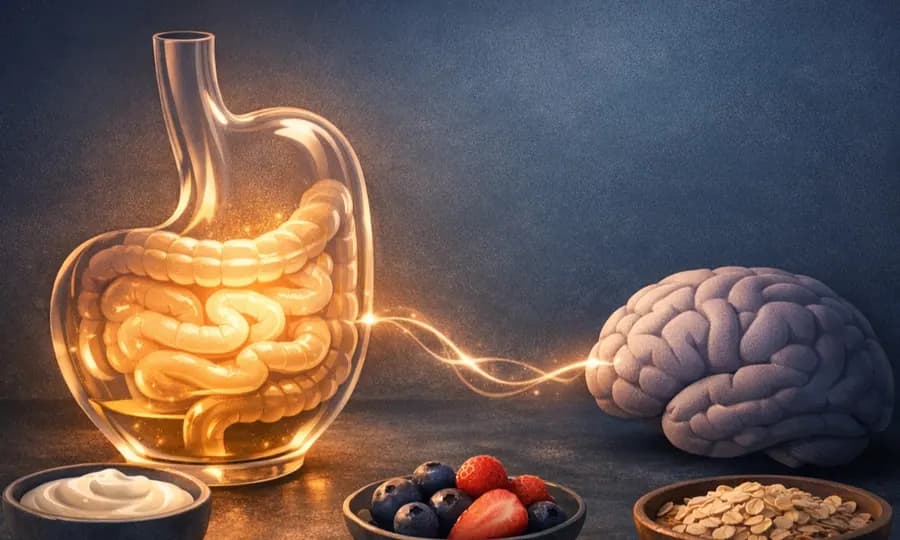
Bloating, constipation, diarrhea, reflux, and chaotic eating do not stay politely in the gut. They can make you distracted, uncomfortable, irritable, and more likely to read the whole day as low energy or low mood. That still does not mean every emotion is a microbiome story.
An upset gut can hijack a normal day
The conversation goes both ways
Stress, poor sleep, and nervous-system tone can change gut function. Gut discomfort can send information back through nerves, hormones, immune signals, and plain old discomfort. That is enough to affect the day without turning every mood swing into a microbiome mystery.
The basics still beat supplement theater
Meal regularity, enough fluid, enough fiber, and fewer foods that obviously wreck your stomach still do the most work. For most adults, a useful fiber target is around {{mass_g:25|38}} per day. You do not need precise tracking. You need a rough sense of whether the day contained beans, oats, fruit, vegetables, or other real plant foods.
Quick check
Quick check
Try this
Run a 7-day gut note, not a lifetime diagnosis
For one week, write down three things only: what you ate, when symptoms showed up, and what the bowel pattern looked like. Keep it simple. You are looking for repeat offenders like huge greasy meals, too little fiber, late-night eating, or obvious dairy or alcohol patterns.
Try this
Build one gut-safe default meal
Pick one repeatable meal that gives you fiber and does not start drama. Oats, yogurt, berries, and seeds work. So does rice, beans, vegetables, and olive oil. One steady meal per day usually does more than constantly reinventing the whole plan.
Try this
Use the two-question filter before chasing a supplement
Ask: did I give the basics 10 to 14 steady days, and is there one clear symptom I am actually trying to improve? If the answer is no, the supplement decision is probably too early.
Try this
Know the red-flag line*
Blood in stool, persistent vomiting, unexplained weight loss, fever, nighttime symptoms, or ongoing pain that is worsening is not something to brush off.
Educational content only — not medical advice.
Key idea
What to remember
Gut health matters, but the practical first moves are still regular meals, enough fiber, enough fluid, and noticing what predictably causes trouble. Use patterns first, supplements second, and do not turn every bad day into a microbiome myth.