You started Monday with a clean plan and real momentum. By the next weekend a dinner out, a tired evening, and one bad day had ended it, and you were waiting for the next Monday to start over. The plan was not too weak. It was too strict to survive an ordinary week. Keto, low fat, fasting, high protein, or meal timing all only work if they create a calorie gap you can keep.
The strict plan worked until the first normal week
Slow loss is the standard, not a failure
The CDC says gradual loss, about {{mass_kg:0.45|0.9}} a week, is more likely to stick. That is why a daily deficit of roughly 300 to 500 calories is usually a better opening move than a crash diet you can only survive for eight days.
The math matters, but appetite decides whether it survives
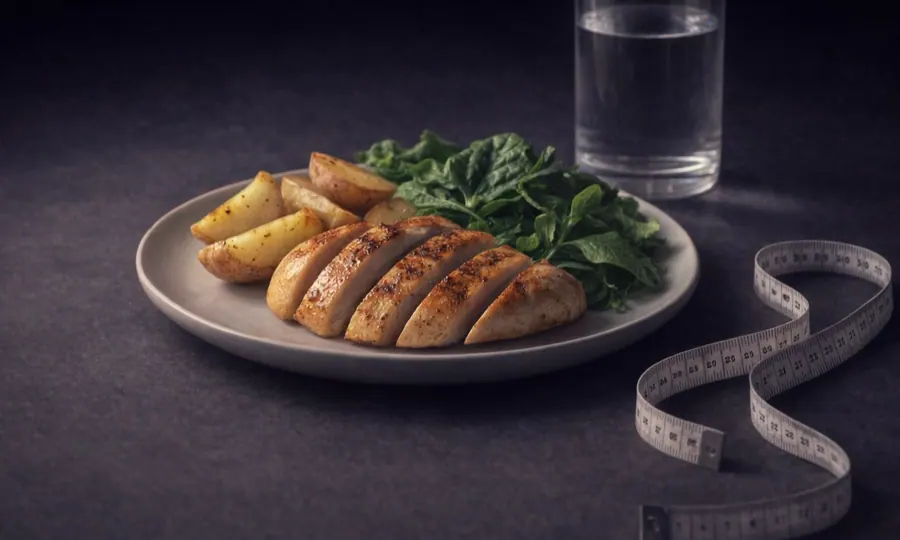
The calorie gap is the mechanism. Protein, fiber, sleep, and step count decide whether that gap is livable. A pastry and coffee can fit the numbers and still leave you starving by 11:00. A real meal usually holds much better.
Quick check
Fat Loss Check
Try this
Start with a 300 to 500 calorie cut
Do not start with starvation. A {{volume_ml:500}} soda can be about 200 kcal, and a casual chocolate bar or pastry can add another 200 to 300. Removing one automatic drink plus one mindless snack, or shrinking one heavy evening meal, often gets you close to a useful starting deficit without turning the whole day into a fight.
Try this
Keep protein in every real meal
Use the basic protein minimum from the food-basics lesson. For a {{masskg:70}} adult that is about {{massg:56}} a day, which often looks like roughly {{massg:20}} at breakfast and {{massg:20|30}} at lunch and dinner. Eggs, Greek yogurt, chicken, beans, tofu, fish, or meat all count.
Try this
Cut liquid calories first
Sweet coffee, juice, soda, alcohol, and casual extras can eat hundreds of calories without making you feel done. Water, diet soda, sparkling water, or unsweetened tea is usually the easiest first win.
Try this
Use a weekly trend, not one scale panic
Weigh at the same time 3 to 7 mornings a week and look at the weekly average. Salt, carbs, stress, periods, and bowel timing can move the scale day to day. The weekly direction matters more than Wednesday drama.
Try this
Escalate if the math stops matching reality
If you are genuinely consistent for several weeks and nothing moves, check portions, snacks, drinks, weekends, and step count first. If the pattern still does not make sense, bring it to a clinician or dietitian instead of making the deficit harsher forever.
Educational content only — not medical advice.
Key idea
What to remember
Fat loss is not mysterious. Use a small calorie gap, eat in a way that keeps hunger sane, and judge progress by the weekly trend instead of daily emotion.
The calorie gap drives fat loss, but appetite control decides whether you can keep the gap going.