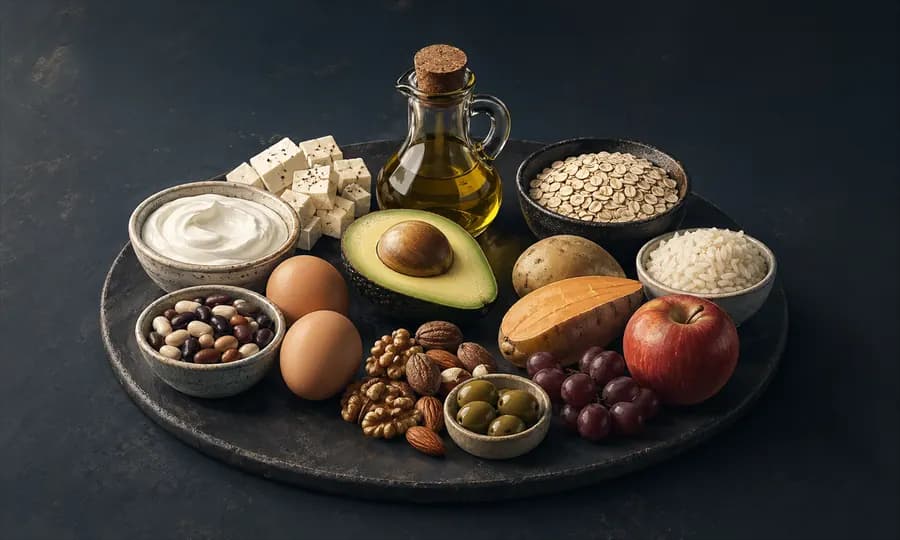
Protein helps build and repair tissue. Carbs are easy fuel. Fat helps with hormones, absorption, and staying power. Food gets confusing when one macro gets treated like the hero and the others like villains.
Macros are not teams. They are tools.
Protein is the one number worth roughly knowing
The adult protein RDA is a minimum, not a sports goal. For a {{masskg:70}} adult, that minimum is about {{massg:56}} a day. That is why breakfast and lunch with no obvious protein source often backfire later.
Carbs and fat are context calls
Carbs help when you move, train, think hard, or simply want a meal that keeps you going. Fat slows digestion and helps meals feel satisfying, but it also packs calories quickly. The useful question is not which macro is 'clean.' It is whether the mix fits the day.
Quick check
Macro Check
Try this
Put protein in every proper meal
Use eggs, yogurt, fish, meat, tofu, beans, lentils, or cottage cheese. If the meal has no obvious protein source, fix that first before you start obsessing over anything else.
Try this
Use carbs where they help
Oats, rice, bread, potatoes, fruit, and beans are not the problem by default. They are useful when you need energy, fullness, or training fuel. The issue is usually the rest of the meal or the amount, not the carb itself.
Try this
Add fat intentionally, not accidentally
Oil, nuts, avocado, cheese, nut butter, and dressings count fast. Use them on purpose because they help the meal, not because they silently doubled the calories.
Try this
Build a macro-balanced fallback meal
Pick one simple default you can repeat: yogurt, oats, berries, and nuts; chicken, rice, and veg; or beans, potatoes, eggs, and salsa. One good template beats another macro argument.
Try this
Do not use macro language to avoid eating normally
If 'low carb', 'high protein', or 'clean fats' is making meals weirder and harder than they need to be, step back. The label is not the goal. A repeatable meal is.
Key idea
What to remember
Protein gives you the clearest daily minimum. Carbs and fat are tools, not teams. Use all three in a way that matches hunger, training, and real life.
Macros are most useful when they stay practical.