You had the pastry and the sweet coffee, felt fine for a bit, then crashed and started hunting for a snack by mid-morning. A sweet, low-protein first meal often does that.
A protein-first breakfast tends to give the next few hours a steadier floor.
Nutrition / Card lesson
A protein-rich first meal can make energy, hunger, and blood sugar steadier.
You had the pastry and the sweet coffee, felt fine for a bit, then crashed and started hunting for a snack by mid-morning. A sweet, low-protein first meal often does that.
A protein-first breakfast tends to give the next few hours a steadier floor.
Park et al. (2015) found that a high-protein breakfast led to a lower after-meal glucose response than a high-carbohydrate breakfast in people with type 2 diabetes.
Do not overstate this as a cure. Use it as a simple stability tool.
Protein at breakfast can make the blood-sugar rise smaller for some people.
Protein takes longer to digest than many refined carbs. Heather Leidy's work on protein and appetite found that a higher-protein breakfast tends to keep people fuller and reduce later snacking.
That can make the first meal feel more like a foundation and less like a quick hit.
Quick check
Try this
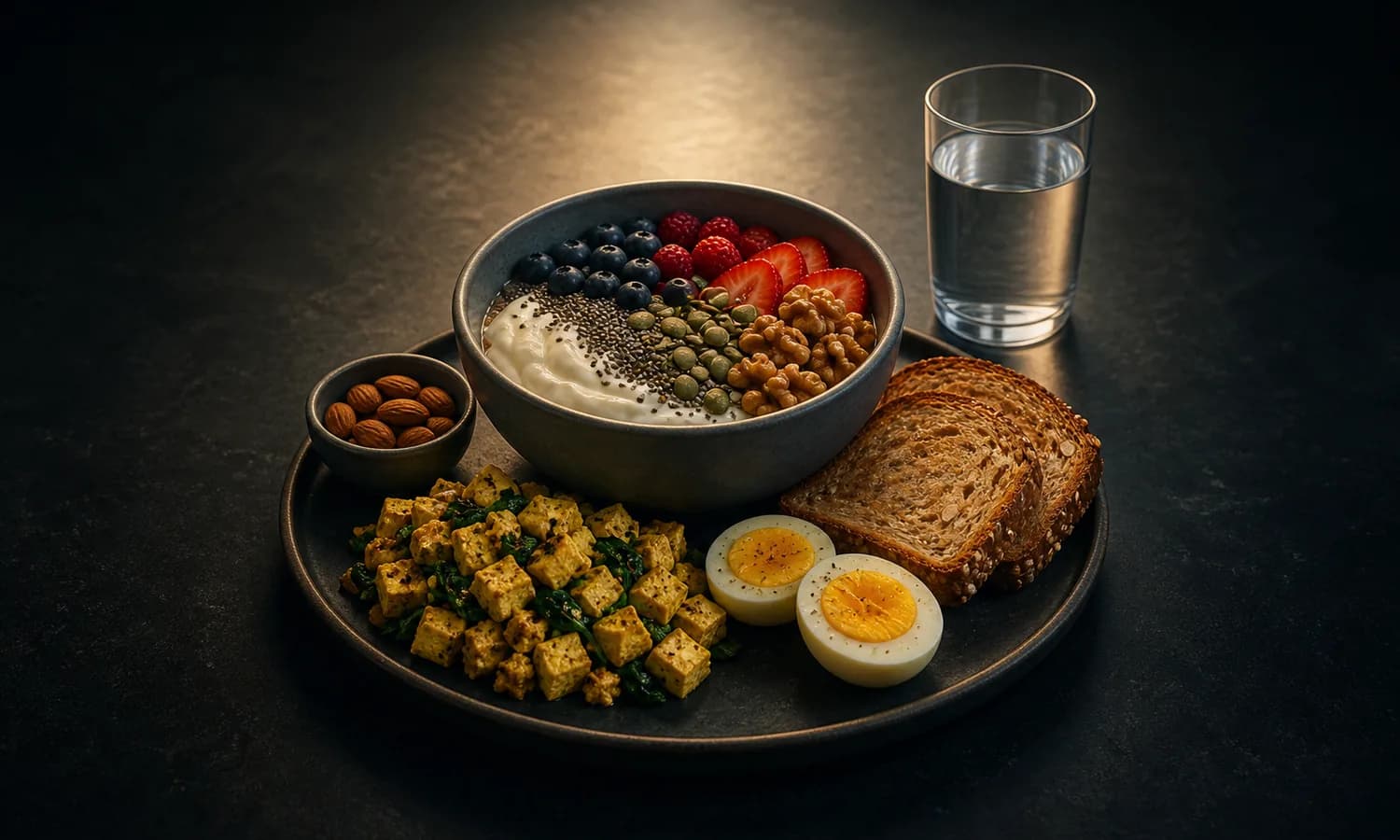
Build one - Greek yoghurt + oats + berries - Eggs + toast + fruit - Tofu scramble + rice - Beans + toast - Protein smoothie + fruit
Aim for roughly 20 to 30 grams of protein if that fits your body and diet.
Try this
Pair protein with fibre: oats, berries, beans, whole-grain bread, veg, nuts, or seeds.
Protein steadies hunger. Fibre helps the meal last longer.
Key idea
A good first meal does not need to be fancy.
Protein plus fibre is the simple version: steadier hunger, steadier energy, fewer emergency snacks.
Start with protein. Add fibre. Keep it repeatable.