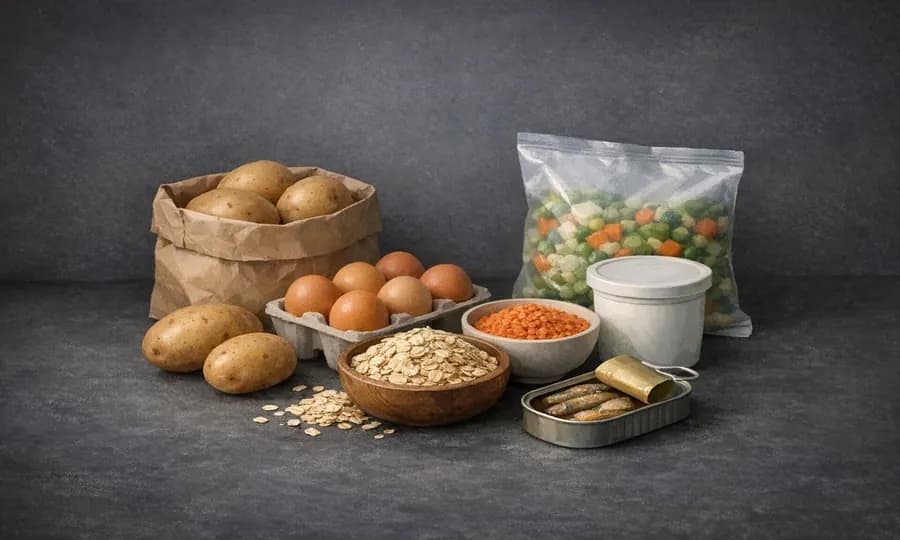
The budget tightened, so the trolley quietly filled with the cheapest fast calories and you told yourself real food was a luxury you could not afford this month. It is a fair worry and mostly wrong. Some of the cheapest things in the store are still proper staples: eggs, oats, lentils, frozen veg, potatoes, yogurt, rice, beans.
Money was tight so the food got worse
Cheap can still be useful food
Ultra-processed food often wins on speed and shelf life, not because it is the only affordable option. Kevin Hall's 2019 work showed those foods also nudge intake up, so they cost more than the price tag suggests.
Dried beans, lentils, eggs, oats, rice, potatoes, yogurt, and frozen vegetables can still give you protein, fiber, and actual meals without boutique prices.
Frozen food is backup, not failure
Frozen fruit and vegetables are often cheaper, keep longer, and waste less than fresh produce that dies in the fridge.
That makes them one of the most reliable ways to keep some real food in the week when money and time are both tight.
Quick check
Budget check
Try this
Build the shop around protein first
Before your next shop, write the protein staples first: eggs, tofu, Greek yogurt, canned fish, cheap chicken thighs, beans, or lentils. That gives the week structure and reduces the chance that every tired moment turns into takeout or snack food.
Try this
Use frozen food as backup, not defeat
Keep two bags of frozen spinach, mixed veg, or broccoli in the freezer at all times. They need almost no prep and make cheap meals less likely to turn into plain carbs and regret.
Try this
Use beans and lentils as cheap base foods
Buy dried lentils or beans in bulk when you can. One bag gives you multiple meals with protein and fiber for the price of one or two convenience-food hits.
Try this
Use canned fish if it works for you
Canned sardines, salmon, tuna, or mackerel can be cheaper ways to add protein and useful fats without turning the week into supplement theater. If you tolerate them and like them, they are a strong budget upgrade.
Try this
Batch one cheap anchor meal
Once a week, cook one big cheap staple such as chili, soup, lentils, or pasta with protein. The point is not meal-prep cosplay. It is removing several high-stress food decisions before they become expensive ones.
Key idea
What to remember
Cheap and decent beats perfect and impossible. Protein first, frozen veg in reserve, one batch-cooked fallback, and a few honest staples go further than nutrition theater.
Cheap and decent beats perfect and impossible.