A slip often feels smaller than the story after it: well, I already blew it, might as well keep going, I am back at zero anyway.
That story usually does more damage than the first lapse.
Craving & Reward / Card lesson
The dangerous part of a slip is often the story that turns one lapse into permission.
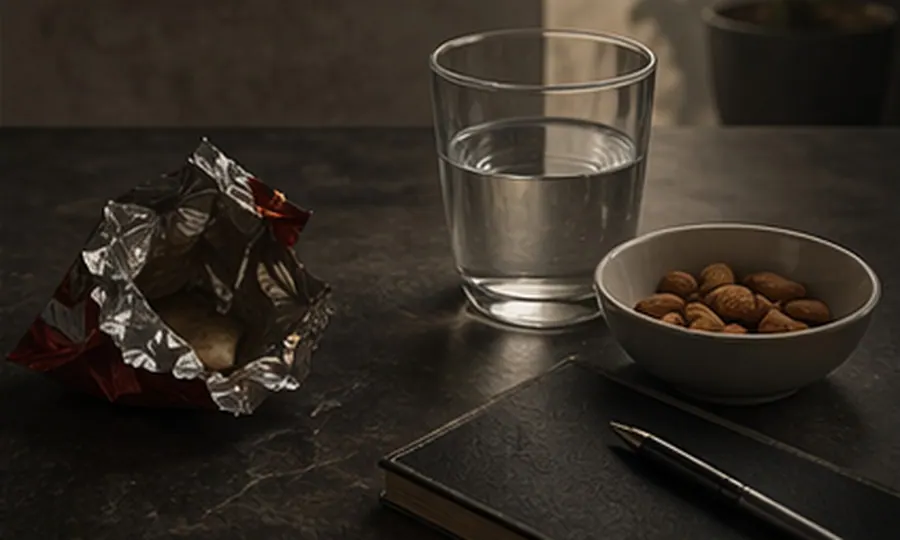
A slip often feels smaller than the story after it: well, I already blew it, might as well keep going, I am back at zero anyway.
That story usually does more damage than the first lapse.
Once people frame one slip as proof of failure, they often stop using the tools that were still available.
The loop gets extra fuel from hopelessness, secrecy, and the urge to escape the shame fast.
The practical goal is not perfect streak perfection.
It is reducing how long the lapse gets to run the show. A short reset after a slip protects more recovery than a long self-punishment speech.
Quick check
Try this
Use one line you can believe: A slip is a data point, not a new identity, Stop here, not tomorrow, or The next useful move still counts. Prewritten language matters because shame makes thinking sloppy.
Try this
After a slip, make the next day cleaner on purpose: remove cues, sleep earlier, eat real food, cancel the risky plan, or ask for support. Recovery is more believable when the next day is less chaotic.
Try this
A fast text like rough night, resetting today can stop the shame story from turning into full disappearance. Pick one person who helps you return to the plan instead of acting shocked.
Key idea
Do not let one lapse buy a whole relapse. Shrink the damage window, use the rescue script, and return to the next useful move fast.
If a habit or substance is significantly affecting your life, or if stopping ever feels physically unsafe, seek professional support.